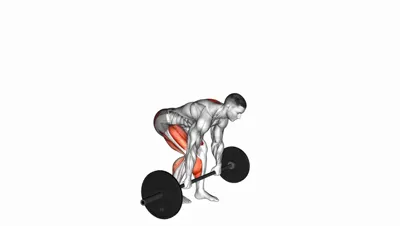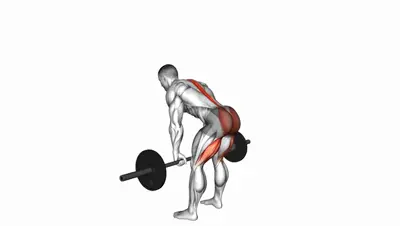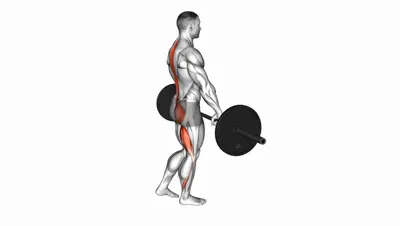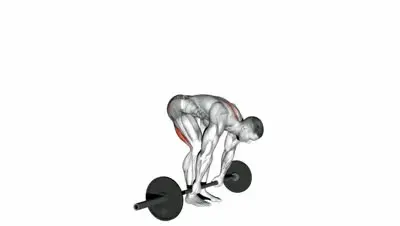

Description
The seated single-leg curl is a hamstring isolation performed one leg at a time on a seated leg-curl machine. With your back supported and a pad across your thighs, you curl one heel down and under the seat against a fixed-plane load, training the hamstrings without any help from the other leg. The seated position keeps the hip flexed, which lengthens the biarticular hamstrings and shifts emphasis toward them throughout the curl. Working unilaterally exposes and corrects left-right strength differences and lets you give each leg full focus — making it one of the most precise tools for balanced hamstring development.
How to perform
- Adjust the seat and pads Set the back pad so your knees line up with the machine's pivot, and lower the thigh pad snugly over your legs. Select a load you can curl with one leg.
- Position one leg Place one leg's lower shin against the roller pad with the leg extended, and rest or lightly support the other leg. Grip the handles and sit back firmly.
- Curl the heel under Curl the working heel down and back under the seat by contracting the hamstring, keeping your hips and thigh pinned to the pads throughout.
- Squeeze at full flexion Pause briefly at the point of deepest knee flexion with the hamstring fully contracted, without letting your hips lift off the seat.
- Extend under control Return the leg slowly to near-full extension, resisting the load on the way back and keeping tension on the hamstring rather than letting the weight slam.
- Match both legs Complete all reps on one leg, then switch. Train the weaker leg first and hold the stronger leg to the same rep count and tempo.
Tips
- Keep your hips and thigh pinned to the pad — letting the hip lift to gain range cheats the hamstring out of the work.
- Control the eccentric — lowering the leg slowly under load is where much of the hamstring growth comes from.
- Point the toes slightly to vary the feel; a dorsiflexed (toes-up) foot can increase the gastrocnemius contribution if you want it.
- Train the weaker leg first and match the stronger leg to it — the unilateral setup is your tool for fixing imbalances.
- Pause and squeeze at full flexion rather than rushing — the peak contraction is short-changed if you bounce out of it.
Common mistakes
- Lifting the hips off the seat — using a hip thrust to move the pad takes the hamstring out and risks the lower back.
- Using momentum — kicking the weight down and letting it fly back removes the controlled tension the hamstring needs.
- Partial range — failing to extend nearly straight or to curl fully under shortens the working range and the stimulus.
- Training only the strong leg hard — letting the dominant leg outwork the other widens the imbalance the exercise should fix.
- Setting the pivot wrong — if your knee does not line up with the machine's axis, the resistance fights your joint instead of your hamstring.
Recommended sets & reps
| Sets | Reps | RIR | |
|---|---|---|---|
| Strength | 3–4 | 6–8 | 1–2 |
| Hypertrophy | 3–4 | 10–15 | 1–2 |
| Endurance | 2–3 | 15–20 | 2–3 |
| Power | 3 | 6–8 | 2–3 |
As a single-joint isolation, favour 3–4 sets of moderate-to-high reps (8–20) per leg rather than heavy low-rep work. These are working sets per side; pair with hip-hinge movements like RDLs across the week for ~10–20 weekly hamstring sets (Schoenfeld 2017, Pelland 2025).
Benefits
Isolates the hamstrings one leg at a time, exposing and correcting the left-right strength differences that a bilateral leg curl hides. The seated position keeps the hip flexed, lengthening the biarticular hamstrings and emphasizing them through the curl — complementing the lying leg curl, which works the hip-extended position. Training each leg independently lets you give the weaker side full attention and equal volume, building balanced hamstrings that protect the knee and support sprinting and hinging. The machine's fixed plane and back support make it low-skill and safe to push close to failure, so it is an easy, precise way to add knee-flexion volume to any leg day.
Frequently asked questions
Seated vs lying leg curl — what's the difference?
The seated leg curl keeps the hip flexed, which lengthens the hamstrings and tends to emphasize them more strongly through the curl; the lying leg curl works the hip-extended position. Research suggests the seated version can drive more hamstring growth, but training both covers the full range. Single-leg work on either adds imbalance correction.
Why train one leg at a time?
Most people have a stronger and weaker leg, and a two-leg curl lets the strong side compensate. Curling one leg at a time forces each hamstring to do its own full work, exposing and correcting imbalances that otherwise grow over time.
How heavy should I go on single-leg curls?
Moderate. As an isolation it responds best to controlled tension and reps, not maximal load. Pick a weight you can curl strictly for 10–15 reps per leg without lifting your hips. Add load once the top of your rep range becomes easy on both legs.
Do I still need this if I do Romanian deadlifts?
They complement each other. RDLs train the hamstrings through hip extension under a big stretch; the seated leg curl trains knee flexion, the hamstring's other function. Including both builds more complete hamstrings than either alone — aim for both across your weekly leg work.
Educational guidance only — not a substitute for in-person coaching. Train within your ability and use a spotter for heavy attempts.