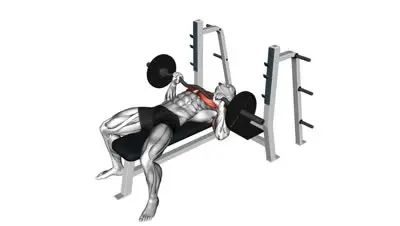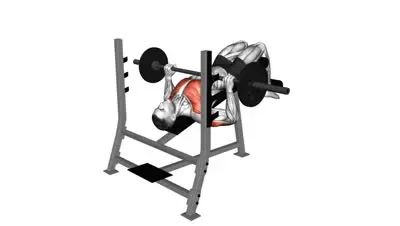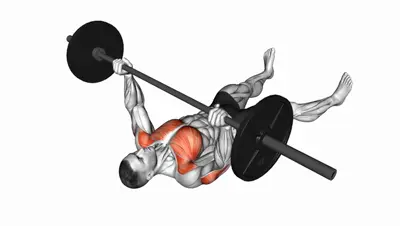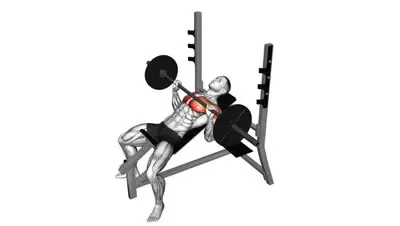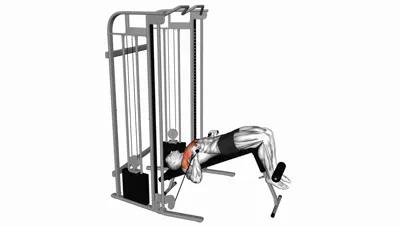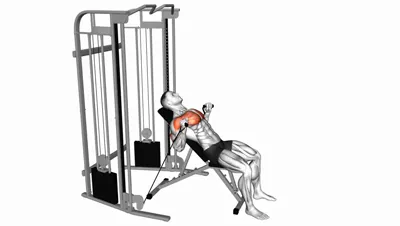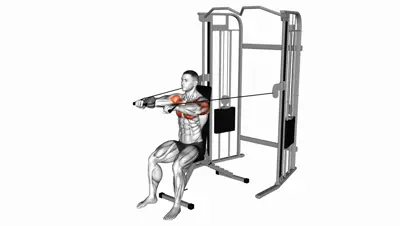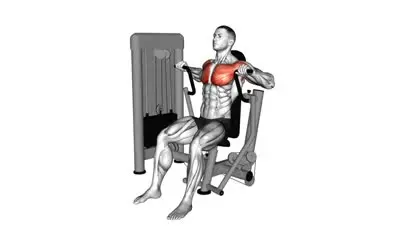

Description
The cable standing chest press is a standing horizontal press performed from a cable pulley, training the chest, front delts and triceps while the entire core braces against the load. Unlike a bench press, there is no bench to push against — you stagger your stance and resist the cable trying to rotate and pull you backward, making it a functional, core-integrated press. The constant cable tension keeps the pecs loaded through the full range and lets the hands converge at the top for a strong contraction. It is a joint-friendly chest builder that doubles as anti-rotation core training and needs no spotter.
How to perform
- Set the pulley at chest height Set both cable pulleys to roughly chest height (or use a single pulley for one arm). Grab a handle in each hand and step forward so the cables are taut, facing away from the stack.
- Stagger your stance and brace Take a staggered stance with one foot forward for a stable base. Brace your core hard, squeeze your glutes, and bring the handles to the sides of your chest with elbows tucked.
- Press forward and inward Press the handles forward and slightly toward each other, extending the elbows until the hands meet in front of your chest. Squeeze the pecs at the point of full extension.
- Resist the rotation Keep your torso square and still as you press — the cable will try to pull you back and rotate you. Bracing against that pull is part of the exercise.
- Return under control Bring the handles back to chest level under control, letting the pecs stretch without letting the cables yank your shoulders too far back.
- Keep tension throughout Maintain constant tension on the cables for every rep and keep your stance and brace locked in from first rep to last.
Tips
- Stagger your stance and brace your glutes and core — the standing press is as much an anti-rotation core drill as a chest exercise.
- Converge the hands at the end of the press; bringing them together drives a harder pec contraction than stopping with the arms parallel.
- Start lighter than you would on a bench — without a bench to push against, your stance limits how much you can stabilize.
- Keep the elbows tucked to roughly 45° and press in a smooth arc rather than letting them flare wide.
- Press one arm at a time when you want to maximize the anti-rotation core demand and even out side-to-side differences.
Common mistakes
- Leaning the whole torso into the press — using bodyweight to shove the handles forward turns it into a falling press and removes chest tension.
- Letting the cable rotate you — failing to brace means the obliques give out and the press loses its line. Keep the torso square.
- Standing square with feet together — a narrow base makes you unstable and forces you to use a load far below what the chest can handle.
- Flaring the elbows wide — pressing with elbows at 90° stresses the shoulders and reduces the converging-arc pec contraction.
- Going too heavy — if you have to step into the weight or stumble forward, the load is beyond what your stance can stabilize.
Recommended sets & reps
| Sets | Reps | RIR | |
|---|---|---|---|
| Strength | 3–4 | 6–10 | 1–2 |
| Hypertrophy | 2–3 | 8–12 | 1–2 |
| Endurance | 2–3 | 12–15 | 2–3 |
| Power | 3–4 | 5–6 | 1–2 |
These ranges are working sets only — add 1–2 progressive warm-up sets before each working set. Pair with 2× per week frequency to reach ~10–20 weekly sets for the chest, the volume range supported by current evidence (Schoenfeld 2017, Pelland 2025).
Benefits
Trains the chest with constant cable tension while doubling as an anti-rotation core exercise, since the standing position forces your trunk to resist the cable's pull. The converging press path lets the hands meet for a peak contraction, and the lack of a bench keeps the shoulder blades free to move naturally. It is highly joint-friendly, needs no spotter, and carries over to real-world and athletic pushing where you press from your feet rather than your back. As a single-arm variation it exposes and corrects side-to-side strength differences. A versatile, low-fatigue chest and core builder for any program.
Frequently asked questions
Cable standing chest press vs bench press — which should I use?
The bench press is the primary mass and strength builder because the bench lets you stabilize and load heavy. The standing cable press is an accessory that adds constant tension, anti-rotation core work, and functional carryover. Use the bench as your main press and the standing cable press as a supplement.
Should I press with one arm or two?
Both have a place. Two arms let you handle more load and focus on the chest; one arm at a time dramatically increases the anti-rotation core demand and corrects left-right imbalances. Rotate between them depending on whether your goal is chest volume or core integration.
Why can't I use as much weight as on the bench press?
Standing removes the bench you normally push against, so your stance and core become the limiting factor, not your chest. That is expected — use a lighter load, brace hard, and judge the set by chest tension rather than the number on the stack.
Is the standing cable chest press good for beginners?
Yes, once you can brace properly. It is joint-friendly and needs no spotter, but a beginner should first learn to stagger the stance and keep the torso square. Start light and build the core stability before adding load.
Educational guidance only — not a substitute for in-person coaching. Train within your ability and use a spotter for heavy attempts.