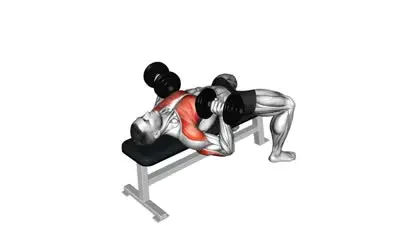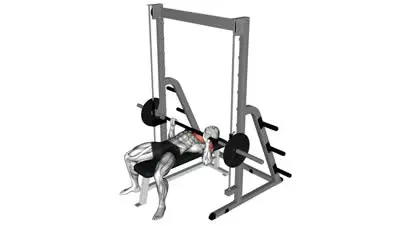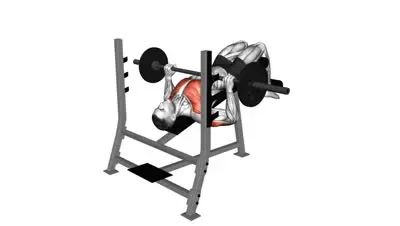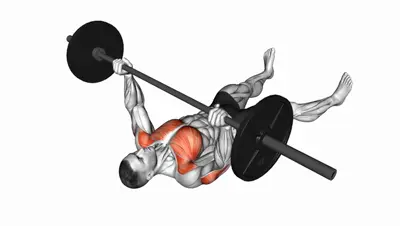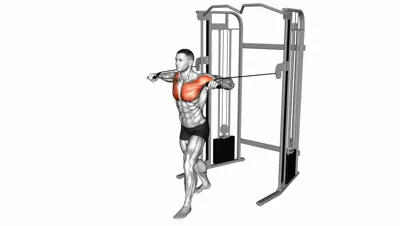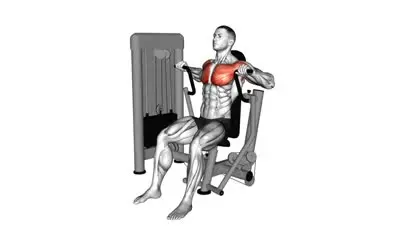

Description
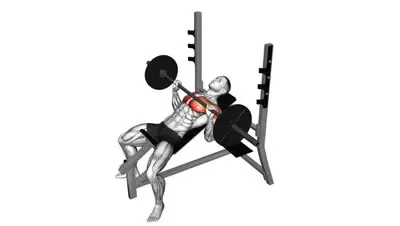
The barbell bench press is the cornerstone compound exercise for upper-body pushing strength, training the chest (pectoralis major), front delts (anterior deltoid) and triceps in a single movement. It is one of the three primary lifts of powerlifting alongside the squat and deadlift, and remains the gold standard for measuring upper-body pressing strength. Performed correctly, it allows progressive overload over years of training and translates directly to overall pec hypertrophy, shoulder stability and pressing power.
How to perform
- Set up on the bench Lie flat on a sturdy bench with your eyes directly under the bar. Plant your feet firmly on the floor, drive your shoulder blades down and back into the bench, and arch your lower back slightly to engage the upper back.
- Establish your grip Grip the bar slightly wider than shoulder-width with a full grip — thumbs wrapped around the bar. Keep your wrists stacked straight over your forearms, not bent backward.
- Unrack and brace Unrack the bar with locked elbows and bring it directly over your lower-chest line. Take a deep belly breath and brace your core.
- Lower to the chest Lower the bar under control to your lower chest (around the nipple line), tucking your elbows to roughly a 45–60° angle relative to your torso — not flared at 90°. Touch the chest with control; do not bounce.
- Press to lockout Drive your feet into the floor and press the bar back up in a slight backward arc, finishing with the bar over your shoulders. Lock out the elbows without losing the shoulder-blade retraction.
- Reset between reps Reset your breath and brace at the top before the next rep. Keep the bar path consistent set to set.
Tips
- Keep your shoulder blades pinched throughout — this protects the shoulders and gives a stable pressing platform.
- Drive through your heels and full foot, not your toes — leg drive is part of the lift, not cheating.
- Use a spotter or safety arms whenever you train near your max — never bench heavy alone in a power rack without pins.
- Train the bench press 2× per week as separate sessions (heavy + light/volume) for the fastest strength gains.
- Touch a consistent point on your chest every rep — drift in bar path is the #1 cause of stalled progress.
Common mistakes
- Flaring elbows out at 90° — this overloads the shoulder joint and is the leading cause of bench press shoulder injuries.
- Bouncing the bar off the chest — robs the bottom range of stretched-position tension and can bruise the sternum.
- Pressing without retracting the shoulder blades — the chest cannot contract fully when the shoulders roll forward.
- Lifting the hips off the bench — converts the lift into a decline press and disqualifies the rep in any meet.
- Choosing a grip too wide — limits triceps engagement and shortens range of motion. Aim for slightly wider than shoulder-width.
Recommended sets & reps
| Sets | Reps | RIR | |
|---|---|---|---|
| Strength | 3–5 | 3–6 | 1–2 |
| Hypertrophy | 2–3 | 6–9 | 1–2 |
| Endurance | 2–3 | 12–15 | 2–3 |
| Power | 3–5 | 3–5 | 1–2 |
These ranges are working sets only — add 1–2 progressive warm-up sets before each working set. Pair with 2× per week frequency to reach ~10–20 weekly sets per muscle group, the volume range supported by current evidence (Schoenfeld 2017, Pelland 2025).
Benefits
Builds upper-body pressing strength faster than any single-joint chest exercise. Develops the entire pec line — clavicular, sternal and costal heads — through full range of motion. Strengthens the triceps and front delts as a synergistic side-effect, transferring directly to overhead pressing and arm size. Trainable for decades with progressive overload, making it the single best long-term mass-builder for the upper body. Provides a clear, plate-loadable benchmark to track strength progress year over year.
Frequently asked questions
How wide should my grip be for bench press?
Slightly wider than shoulder-width — about 1.5× your shoulder width measured between the index fingers. A grip too wide limits triceps engagement and shortens range of motion; a grip too narrow shifts the load to the triceps and away from the chest.
Should the bar touch my chest?
Yes — touch the lower chest under control on every rep, around the nipple line. Stopping short of the chest robs the bottom range of stretched-position tension and is one of the main reasons people stall on the bench press.
How many days per week should I bench press?
Two sessions per week is optimal for most lifters — one heavier session (3–5 reps) and one lighter higher-rep session (6–10 reps). This gives enough volume for hypertrophy plus enough specificity for strength gains while still allowing recovery.
Why do my shoulders hurt when benching?
The most common cause is flaring elbows at 90° to the torso, which overloads the shoulder joint. Tuck your elbows to roughly a 45–60° angle, retract the shoulder blades hard into the bench, and avoid bouncing the bar — these three fixes resolve most bench-press shoulder pain.
Educational guidance only — not a substitute for in-person coaching. Train within your ability and use a spotter for heavy attempts.