
Description
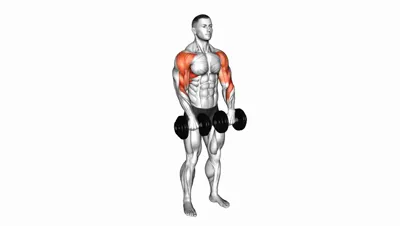
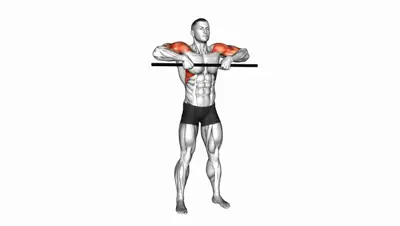
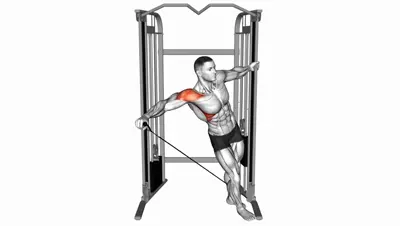
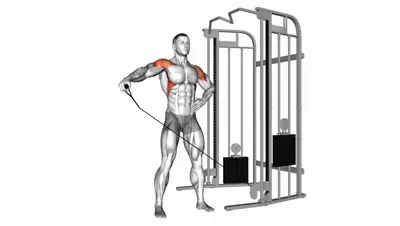
The chest-supported lateral raise is a strict isolation for the lateral delts, performed lying face-down (prone) on an incline bench. With your chest braced against the pad, you raise two dumbbells out to the sides, completely removing the body English and momentum that plague standing lateral raises. The chest support locks your torso in place so the only thing that can move the weight is the side delt — making it one of the cleanest, most honest lateral-delt builders available. It is ideal for lifters who tend to swing standing raises, and for adding strict, high-quality side-delt volume to round out shoulder width.
How to perform
- Set an incline and lie prone Set an incline bench to roughly 30–45° and lie face-down (chest-supported) on the pad with a light dumbbell in each hand hanging toward the floor.
- Set your shoulders Let the dumbbells hang with a slight bend in the elbows. Pull your shoulder blades down — do not let them shrug up toward your ears as you start.
- Raise out to the sides Raise both dumbbells out to the sides in a wide arc until your upper arms reach roughly shoulder height. Lead with the elbows and keep a fixed soft elbow bend.
- Pause at the top Pause briefly at the top with the dumbbells level with your shoulders and the side delts fully contracted. Keep the wrists neutral, not tilted up.
- Lower under control Lower the dumbbells slowly back toward the floor, resisting gravity the whole way down. The chest stays pinned to the pad throughout.
- Keep it strict Do not jerk or swing — because the chest is supported, any momentum means the weight is too heavy. Reset and stay strict for every rep.
Tips
- Lead with your elbows, not your hands — raising the elbows keeps the load on the side delt instead of the front delt.
- Keep a slight, fixed elbow bend the whole set; straightening or bending the elbows mid-rep cheats the range.
- Go lighter than a standing raise — the chest support removes all momentum, so the side delt does 100% of the work.
- Pause for a beat at the top to eliminate any bounce and prove the delt is controlling the weight.
- Stop the raise at about shoulder height — going higher recruits the traps and takes tension off the side delt.
Common mistakes
- Loading too heavy — because there is zero momentum, a weight that works standing is far too heavy here and forces shrugging.
- Shrugging the traps — letting the shoulders rise toward the ears at the top shifts work from the side delt to the upper traps.
- Raising past shoulder height — going too high brings the traps in and unloads the lateral delt.
- Bending the elbows to cheat range — turning it into a partial upright row removes the isolation the chest support provides.
- Tilting the wrists up — leading with the pinky or cranking the wrist adds shoulder stress without improving delt activation.
Recommended sets & reps
| Sets | Reps | RIR | |
|---|---|---|---|
| Strength | 3–4 | 8–10 | 1–2 |
| Hypertrophy | 3–4 | 10–15 | 1–2 |
| Endurance | 2–3 | 15–20 | 2–3 |
| Power | 3 | 8–10 | 2–3 |
Lateral raises are an isolation movement — favour higher reps (10–20) and 3–4 sets rather than heavy low-rep work, since the side delt responds best to volume and constant tension. These are working sets only; pair with 2× per week frequency for ~10–20 weekly side-delt sets (Schoenfeld 2017, Pelland 2025).
Benefits
Isolates the lateral delts more strictly than any standing variation because the chest support eliminates the body English that lets you cheat. That makes it one of the most effective ways to build shoulder width with clean, honest tension on the side delt. It is especially valuable for lifters who unconsciously swing standing raises, and for accumulating high-quality side-delt volume late in a session when fatigue tempts you to use momentum. Because the torso is fixed, it is also gentle on the lower back. A precise, low-skill isolation that builds the capped, 3D delts that make a physique look wider.
Frequently asked questions
Chest-supported vs standing lateral raise — which is better?
The chest-supported version is stricter because the pad removes all momentum, so the side delt does every bit of the work — ideal for clean hypertrophy. Standing raises let you use slightly more load and a little controlled body English. Use the chest-supported version when you want strict tension and the standing version for heavier overload.
How is this different from the incline lateral raise?
The chest-supported raise is done prone (face-down) on the pad, so the delt is loaded most at the top of the range. The incline lateral raise is done side-lying, which loads the delt hardest in the stretched bottom position. They emphasize different parts of the strength curve and work well together.
How much weight should I use?
Much less than you think — often half of what you would swing standing. The chest support removes momentum entirely, so pick a weight you can raise strictly to shoulder height for 10–15 reps without shrugging. Add load only when the top of your rep range becomes easy.
How often should I train lateral raises?
The side delts recover quickly and respond to frequency — training them 2–3× per week with a few sets each session is ideal. Spreading 10–20 weekly side-delt sets across several days beats cramming them all into one.
Educational guidance only — not a substitute for in-person coaching. Train within your ability and use a spotter for heavy attempts.