
Description
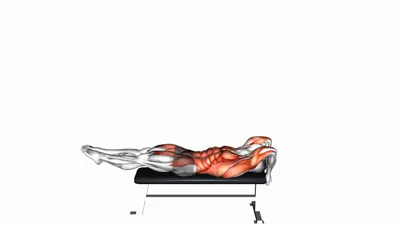
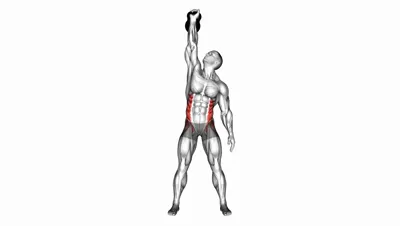
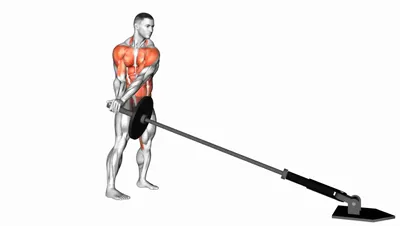
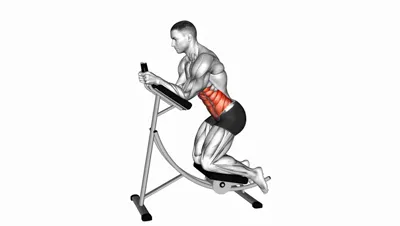
The dead bug is the gold-standard anti-extension core drill — lying on your back with arms and knees stacked vertically, you extend the opposite arm and leg while your lower back stays pressed into the floor. The skill being trained is resisting lumbar extension as the limbs move, which is exactly what a strong core does under squats, presses and everyday load. Physical therapists and strength coaches alike build programs around it because it strengthens deep core control without a single rep of spinal flexion, making it both a performance tool and one of the safest core exercises that exists.
How to perform
- Lie down and stack your limbs Lie on your back with arms reaching straight up over your shoulders, hips and knees bent to 90 degrees, shins parallel to the floor.
- Press your back into the floor Exhale and gently flatten your lower back against the ground — this contact is the entire point and must not break.
- Extend opposite arm and leg Slowly lower your right arm overhead and extend your left leg until both hover just above the floor, moving only as far as your back stays flat.
- Pause just off the floor Hold the extended position for a beat, ribs down, core working hard, without holding your breath.
- Return and switch sides Bring the arm and leg back to the start under control, then repeat with the left arm and right leg — that is one full rep.
- Keep the rhythm slow Move at a deliberate three-to-four-second cadence per side, exhaling as the limbs extend, never racing through reps.
Tips
- Exhale fully as the limbs extend — emptying the lungs drops the ribs and forces the deep core to hold position, doubling the value of every rep.
- Imagine crushing a grape under your lower back: the instant the pressure lightens, shorten the range until control returns.
- Move slower than feels natural; the dead bug rewards a crawl tempo, and speed is the most common way to make it worthless.
- Progress by range first — limbs lower and longer — then by adding light ankle weights or a small dumbbell in the moving hand.
- If full extension is too hard, extend only the leg with both arms reaching upward, and add the arm once the back stays glued down.
Common mistakes
- Arching the lower back off the floor — the moment daylight appears under your spine, the core has lost and the hip flexors have taken over; shorten the range.
- Moving both limbs on the same side — the opposite-arm-opposite-leg pattern is what creates the anti-rotation challenge; same-side movement halves the work.
- Rushing the tempo — fast, flailing reps look productive and train nothing; the dead bug is an exercise in slow-motion control.
- Holding your breath — bracing by breath-holding hides weak core control; the skill is keeping the back down while breathing out.
- Letting the resting knee drift past vertical — the non-working leg must hold its 90-degree position, or the core unloads between sides.
Recommended sets & reps
| Sets | Reps | RIR | |
|---|---|---|---|
| Strength | 3 | 6–8 | 1–2 |
| Hypertrophy | 2–3 | 8–12 | 1–2 |
| Endurance | 2–3 | 12–20 | 2–3 |
| Power | 3 | 6–8 | 2–3 |
Reps count per side, and control matters more than load — only progress range or add light resistance once your lower back stays pressed down on every rep. Pair with 2× per week frequency, in line with current training evidence (Schoenfeld 2017, Pelland 2025).
Benefits
Builds anti-extension core strength — the ability to keep the spine neutral while the limbs move under load — which is the exact quality that protects the lower back during squats, deadlifts, presses and carries. Trains coordination between opposite limbs and deep core timing in a position with zero spinal compression, making it safe for almost everyone including lifters working around back pain. Improves rib-and-pelvis control that directly cleans up bracing technique on the big lifts. Requires no equipment and almost no recovery cost, so it fits warm-ups, finishers or daily practice equally well.
Frequently asked questions
What is the dead bug exercise good for?
It trains the deep core to resist lumbar extension and rotation while the arms and legs move — the foundational skill behind safe squatting, pressing and lifting. It is equally valuable as performance training and as low-risk rehab-adjacent core work.
Why is it called the dead bug?
The starting position — lying on your back with all four limbs in the air — looks like an upside-down insect. The name stuck because it is memorable, not because the exercise is easy.
Are dead bugs better than crunches?
They train different things. Crunches flex the spine to work the six-pack muscles through motion; dead bugs resist motion to build stability with zero spinal flexion. For back-friendly core strength that transfers to lifting, the dead bug is the better default — many programs use both.
How do I make dead bugs harder?
Slow the tempo, lengthen the levers by reaching further, then add light ankle weights or a small plate in the moving hand. A band pulling the arms overhead from an anchor behind you is the hardest common progression — load anti-extension, not speed.
Educational guidance only — not a substitute for in-person coaching. Train within your ability and use a spotter for heavy attempts.