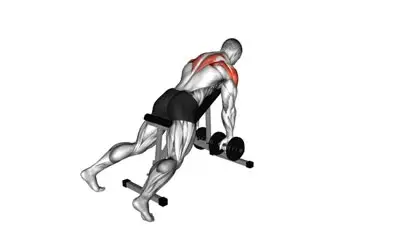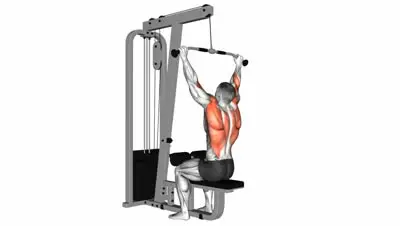

Description
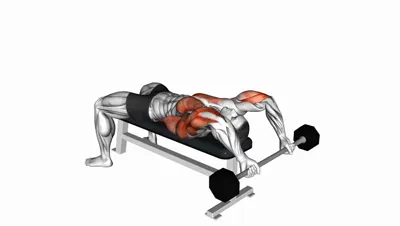
The machine chest supported row plants your torso against a pad and lets you row with zero lower-back involvement — every kilo of effort goes into the lats, rhomboids, mid traps and rear delts. Because the chest pad eliminates the hinge position that limits bent-over rows, you can push rowing sets to true muscular failure without your spinal erectors giving out first. That combination of high stimulus and low systemic fatigue has made chest supported rowing the fastest-growing back movement in modern hypertrophy programs — and one of the smartest picks late in a session.
How to perform
- Set the seat and chest pad Adjust the seat so the handles sit level with your mid-chest and the pad supports you from sternum to upper abdomen.
- Plant your chest and feet Press your chest firmly into the pad, plant your feet, and grab the handles with your chosen grip at full arm stretch.
- Set your shoulders before pulling Depress the shoulder blades away from your ears and let the lats take the slack out of the weight.
- Row the handles to your torso Drive the elbows back along your sides, pulling the handles toward your lower ribs while the chest never leaves the pad.
- Squeeze the shoulder blades At the back, squeeze the shoulder blades together hard for a full beat — this contraction is the rep's payoff.
- Stretch fully between reps Return the handles slowly until the arms are long and the shoulder blades glide forward into a full lat stretch.
Tips
- Let the shoulder blades protract completely at the bottom of every rep — the loaded stretch is half the growth stimulus, and rushing it is the most common waste.
- Think 'elbows to the back pockets', not 'hands to the chest' — elbow-driven rowing keeps the biceps from stealing the set.
- Elbows tight to the body bias the lats; elbows flared toward shoulder height bias the upper back and rear delts — pick the target and keep the angle consistent.
- Because your lower back is protected, this is the row to push closest to failure — save your hardest rowing effort for this machine.
- If your chest lifts off the pad to finish reps, the stack has outrun your back strength — drop one plate and reclaim the strict squeeze.
Common mistakes
- Pushing the chest off the pad to heave the weight — the pad exists to remove momentum; lifting off it reintroduces the cheat and unloads the back muscles.
- Shrugging toward the ears mid-pull — elevated shoulders hand the rep to the upper traps; keep the blades pulled down as they squeeze together.
- Pulling with the arms only — finishing the rep without the shoulder blades moving leaves the rhomboids and mid traps untrained; the blades must retract.
- Cutting the stretch short — bouncing out of a half-extended bottom skips the lengthened-position tension that machine rows deliver so well.
- Setting the seat too low or high — handles arriving at the wrong height turn the row into an awkward shrug or pulldown; line them up with your mid-chest.
Recommended sets & reps
| Sets | Reps | RIR | |
|---|---|---|---|
| Strength | 3–4 | 6–8 | 1–2 |
| Hypertrophy | 2–3 | 8–12 | 1–2 |
| Endurance | 2–3 | 12–15 | 2–3 |
| Power | 3 | 6–8 | 2–3 |
These ranges are working sets only — add 1–2 progressive warm-up sets before each working set. Pair with 2× per week frequency to reach ~10–20 weekly sets per muscle group, the volume range supported by current evidence (Schoenfeld 2017, Pelland 2025).
Benefits
Trains the entire upper back — lats, rhomboids, mid traps and rear delts — with the lower back completely removed from the equation, so the target muscles always fail before your posture does. Allows safe, repeatable training close to failure, which is where rowing stimulus is highest, without the spinal fatigue cost of bent-over variations. Keeps heavy horizontal pulling in your program on days the lower back needs recovery from squats and deadlifts. The fixed machine path makes progress measurable plate by plate, and the strict squeeze it teaches carries over to every free-weight row you will ever do.
Frequently asked questions
What muscles does the chest supported row work?
The lats, rhomboids, mid and lower traps and rear delts do the rowing, with the biceps and forearms assisting. What it deliberately leaves out is the lower back — the chest pad carries the torso so the spinal erectors stay fresh.
Chest supported row vs bent-over row — which is better?
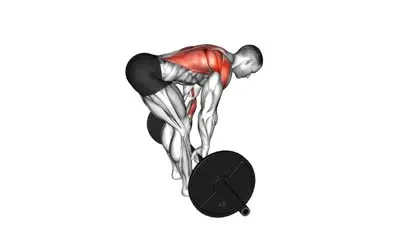
The bent-over row builds more total-body strength because it trains the hinge and bracing along with the pull. The chest supported version isolates the upper back harder per set and lets you train closer to failure safely. Most strong programs use the barbell row early and chest supported rows for volume.
Why do I feel chest supported rows mostly in my arms?
You are pulling with the hands instead of driving the elbows, or the shoulder blades are not retracting. Lighten the load, start each pull by squeezing the blades together, and imagine the hands as hooks — the back takes over within a session or two.
Is the chest supported row good for beginners?
Excellent — the pad removes the balance and hinge demands that make free-weight rows hard to learn, letting beginners feel correct back contraction from the first workout. It builds the strength and motor pattern that later transfer to barbell rowing.
Educational guidance only — not a substitute for in-person coaching. Train within your ability and use a spotter for heavy attempts.