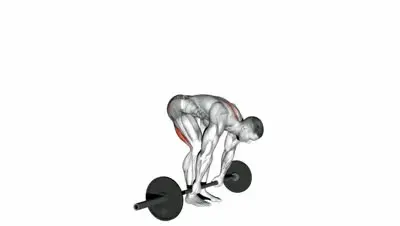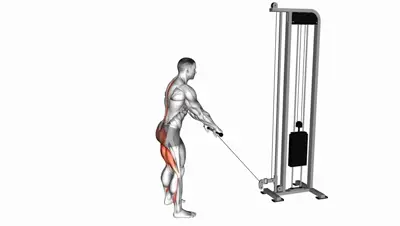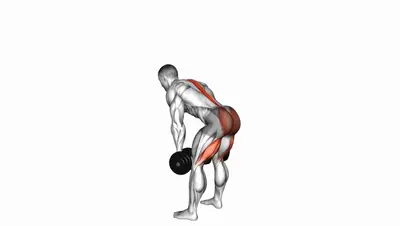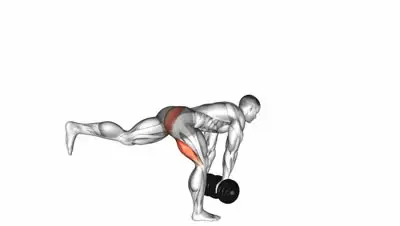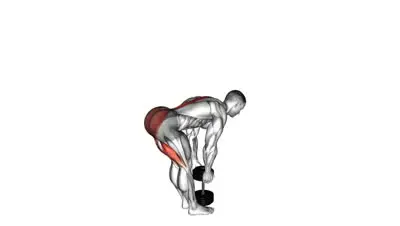

Description
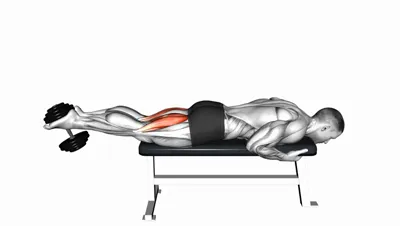
The machine lying leg curl isolates the hamstrings face-down, curling a padded lever from straight knees to full flexion while the bench holds your hips in place. Lying flat puts the hamstrings in a hip-extended position that emphasizes the squeeze at the top of every rep, and the fixed machine path makes near-failure work safe and repeatable. Direct knee-flexion training is non-negotiable for complete hamstrings — hinges like Romanian deadlifts load the stretch but barely train the curl — and the lying machine has been the standard tool for that job for half a century.
How to perform
- Set the machine to your legs Adjust the pad so it rests on your lower calves just above the heels, with your knees aligned to the machine's pivot point.
- Lie flat and anchor your hips Lie chest-down with hips pressed firmly into the bench and hands on the grips — the hips stay glued down all set.
- Start from long hamstrings Begin with legs almost straight, a soft bend protecting the knees, and tension already on the pad.
- Curl the pad to your glutes Flex the knees and pull the pad toward your glutes as far as it travels, without the hips rising off the bench.
- Squeeze hard at the top Hold peak contraction for a full beat with the hamstrings cramping-hard, ankles staying relaxed in your chosen position.
- Lower in three slow seconds Return the pad under control to the long-leg start, resisting the stack the entire way down.
Tips
- Press the hips down into the pad actively on every rep — the instant they lift, the range shortens and the lower back joins a movement it has no business in.
- Keep the ankles dorsiflexed — toes pulled toward the shins — to keep the calves from assisting, or point the toes to feel the difference yourself.
- Fight the eccentric for a full three seconds; the lying curl's lowering phase is where most of its hypertrophy lives.
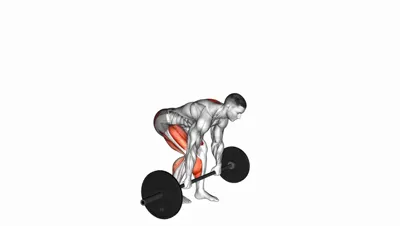
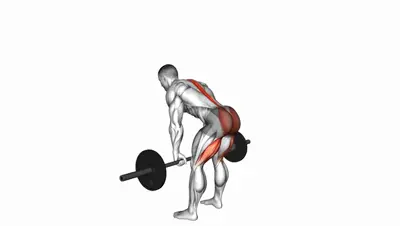
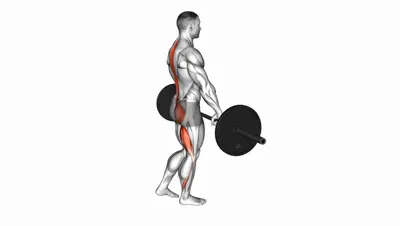
- Pair lying curls with a hip hinge like Romanian deadlifts across the week — curls own the contracted half, hinges own the stretch, and the combination covers the full muscle.
- If both legs make cheating easy, single-leg sets keep the stronger side honest and reveal exactly how big the gap is.
Common mistakes
- Lifting the hips to chase more weight — the rising-hip cheat shortens the curl and converts hamstring work into lower-back strain.
- Loading beyond your squeeze — if the pad bounces off your glutes without a top pause, the stack is moving on momentum, not muscle.
- Skipping the bottom half — short pumping reps in the contracted zone leave the lengthened range untrained, and that is half the exercise.
- Misaligning the knees with the pivot — knees set behind or ahead of the machine's axis grind the joint and bleed force; line them up before the first rep.
- Snapping the legs straight between reps — releasing the stack into a hard knee extension under load is how a strict machine gets a bad reputation.
Recommended sets & reps
| Sets | Reps | RIR | |
|---|---|---|---|
| Strength | 3–4 | 6–8 | 1–2 |
| Hypertrophy | 3–4 | 10–15 | 1–2 |
| Endurance | 2–3 | 15–20 | 2–3 |
| Power | 3 | 6–8 | 2–3 |
These ranges are working sets only — add 1–2 progressive warm-up sets before each working set. Pair with 2× per week frequency to reach ~10–20 weekly sets per muscle group, the volume range supported by current evidence (Schoenfeld 2017, Pelland 2025).
Benefits
Trains knee flexion directly — the hamstring function that hinges and squats leave almost untouched — making it essential for complete hamstring development rather than optional accessory work. The lying position emphasizes the contracted top range and lets you chase a hard squeeze safely to failure on a fixed path. Strong hamstrings through full range protect the knee in sport and add the back-of-thigh fullness that posing and physique judging reward. The machine needs no skill, no spotter and no bracing, so hamstring volume stays easy to add even in the most fatiguing training weeks.
Frequently asked questions
Lying vs seated leg curl — which is better?
Research gives the seated version an edge for overall hamstring growth because the bent-hip position trains the muscle at longer length. The lying curl counters with a harder peak contraction and a different feel. If you can, run both across the week; if you must choose one for size, choose seated — and keep lying curls in rotation.
Why do I cramp during lying leg curls?
The top of the lying curl puts the hamstrings in their shortest, most cramp-prone position — short at the hip and the knee at once. It usually signals honest peak contraction, not a problem; ease into the top squeeze across warm-up sets and stay hydrated.
Should my toes be pointed or flexed during leg curls?
Pulling the toes toward the shins (dorsiflexion) quiets the calves and isolates the hamstrings harder; pointing the toes lets the gastrocnemius assist and usually adds a rep or two. Dorsiflexed is the stricter default — just pick one and stay consistent.
Do I still need leg curls if I do Romanian deadlifts?
Yes. RDLs load the hamstrings at the hip in the stretched range but train knee flexion barely at all. Curls supply the missing function and the missing range — the pairing of one hinge plus one curl is the backbone of complete hamstring training.
Educational guidance only — not a substitute for in-person coaching. Train within your ability and use a spotter for heavy attempts.