
Description
The plank is the foundational anti-extension core exercise: forearms and toes on the floor, body in one rigid line, and every muscle from shoulders to calves working to keep gravity from folding you at the hips. Its value lies in teaching the trunk to resist movement — the actual job of the core in squats, deadlifts, presses and daily life — rather than producing it. Done properly, with glutes squeezed and pelvis slightly tucked, a plank becomes hard within 20–45 seconds; if you can hold one for three minutes while chatting, you are resting on your joints, not training your core.
How to perform
- Set your forearms and hands Place your forearms on the floor with elbows directly under your shoulders, hands flat or lightly clasped, forearms roughly parallel.
- Step back into one line Extend your legs behind you onto your toes so your head, shoulders, hips and ankles form one straight line from the side.
- Tuck your pelvis slightly Squeeze your glutes and tilt your pelvis a touch backward, flattening the lower back — this is what switches the load from spine to abs.
- Brace and push the floor away Tense your abs as if about to take a punch and push your forearms into the floor so your upper back rounds very slightly instead of sagging.
- Breathe behind the brace Keep breathing in short, steady breaths while holding full-body tension — do not trade the brace for big gulps of air.
- Hold quality, then stop Hold as long as your hips stay level and your tension stays high. The set ends when the position degrades, not when the clock says so.
Tips
- Squeeze your glutes as hard as you can for the entire hold — it locks the pelvis in place and instantly makes the plank harder and safer at the same time.
- Think maximum tension, not maximum time: a 20-second plank with everything contracted beats a slack three-minute one in both stimulus and back safety.
- Push the floor away through your forearms so your shoulder blades stay spread — a collapsed chest hangs on the shoulder joints instead of working the serratus.
- Progress by difficulty, not duration: once 45–60 seconds is manageable, elevate your feet, wear a plate, or lift one arm — do not just hold longer.
- Keep your gaze at the floor slightly ahead of your hands so your neck stays in line with your spine.
Common mistakes
- Letting the hips sag — a sunken midsection transfers the load into the lumbar spine and is the number-one reason planks cause back discomfort; tuck the pelvis and squeeze the glutes.
- Hiking the hips into a tent — pushing the hips high makes the hold easier by shortening the lever, and trains nothing; keep the body in one honest line.
- Holding breath throughout — breath-holding spikes blood pressure and collapses the set early; breathe in short, controlled cycles behind the brace.
- Chasing marathon times — endless low-tension planks teach joint-hanging, not core strength; when a minute becomes routine, make the exercise harder instead of longer.
- Craning the neck up — lifting the head to watch the room arches the cervical spine; keep the neck neutral with eyes on the floor.
Recommended sets & reps
| Sets | Reps | RIR | |
|---|---|---|---|
| Strength | 3–4 | 20–30 s | 0–1 |
| Hypertrophy | 2–3 | 30–45 s | 0–1 |
| Endurance | 2–3 | 45–90 s | 1–2 |
| Power | 3 | 15–20 s | 0–1 |
Planks are measured in seconds under full tension, not reps — end each hold when your hips or brace give way (RIR reflects control in reserve). For the shorter ranges, squeeze everything maximally; once 60-second holds feel routine, progress by adding load or instability rather than time.
Benefits
Teaches the trunk to resist extension under fatigue — the exact skill that keeps your spine neutral in squats, deadlifts, overhead presses and everyday lifting. Trains the entire anterior chain isometrically, from abs and obliques to serratus, quads and glutes, with zero equipment and zero spinal compression. Scales from rehab to advanced training through simple tweaks — longer levers, feet elevated, added plates, single-arm holds — without ever needing a machine. Builds the postural endurance that shows up outside the gym: standing, carrying and sitting tall all draw on the same deep stabilizers a properly tensioned plank hammers in seconds.
Frequently asked questions
How long should I hold a plank?
As long as you can keep maximum tension and level hips — for a properly braced plank that is typically 20–60 seconds. Past a minute, add difficulty instead of time: elevate the feet, add a plate or lift one arm.
Are planks better than sit-ups?
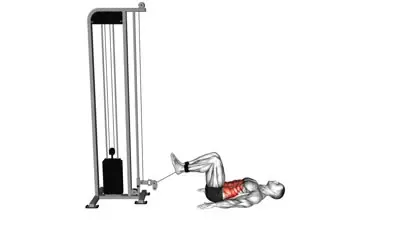
They train different things — planks build anti-extension stability with minimal spinal stress, while sit-ups train trunk flexion through movement. For most lifters, planks plus a loaded flexion exercise like cable crunches cover the core completely.
Why does my lower back hurt during planks?
Almost always sagging hips — without a pelvic tuck and glute squeeze, the lumbar spine hangs into extension and takes the load. Re-set with glutes tight and pelvis tucked, and shorten the hold to what you can keep rigid.
Should I do planks every day?
You can, but you do not need to — 2–3 hard sessions per week within your normal training drive progress just as well. Treat the plank like any exercise: intensity and progression matter more than daily repetition.
Educational guidance only — not a substitute for in-person coaching. Train within your ability and use a spotter for heavy attempts.