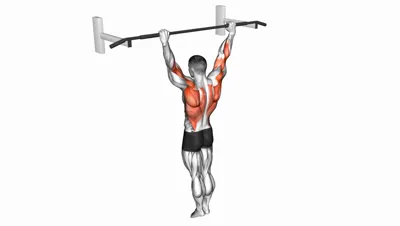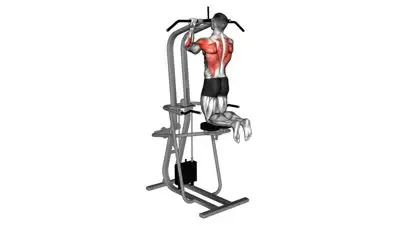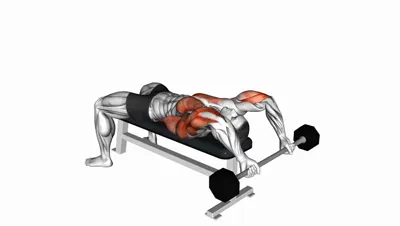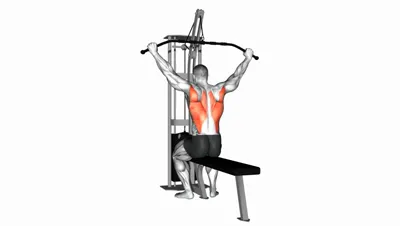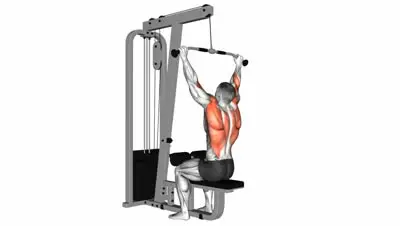

Description
The single arm lat pulldown swaps the wide bar for one handle at the cable station, letting each lat work alone through a longer, freer arc than any two-arm variation allows. The unilateral pull adds reach at the top for a deeper stretch and a lower finish beside the hip, while your trunk resists the twist the one-sided load creates — quiet anti-rotation core work included. It is the pulldown that exposes what a bar hides: if one side pulls less crisply or fatigues first, you will know within a set, and you can fix it before the imbalance ever shows in your rows and pull-ups.
How to perform
- Set the handle and seat Attach a single D-handle to the high pulley and set the thigh pad snug. Sit tall, or kneel side-on if your station has no seat.
- Grip and find the stretch Take the handle with a neutral grip, arm fully extended overhead, and let the weight pull your shoulder blade up for a full lat stretch.
- Start the pull from the shoulder blade Initiate by drawing the shoulder blade down and back, then pull the elbow down and toward your hip in one smooth motion.
- Finish with the elbow at your side Bring the handle to shoulder level or slightly lower with the elbow tucked near your ribs, squeezing the lat hard for one second.
- Resist rotation throughout Keep your torso square and still — the cable will try to twist and lift your working side; your core says no.
- Return slowly and switch arms Let the arm travel back overhead over two to three seconds into the full stretch. Complete the set, then repeat with the other arm.
Tips
- Let the shoulder blade rise fully at the top of every rep — that extra reach is the stretch advantage the single-arm version exists for.
- Pull the elbow toward your hip pocket rather than thinking about the hand; the lat drives the upper arm, and the forearm just connects you to the cable.
- Start every session with your weaker side and cap the stronger side at the same reps — asymmetries close only when you enforce the match.
- A neutral grip with a slight natural wrist rotation through the pull keeps the shoulder in its most comfortable pulling groove.
- Keep the non-working hand off the machine frame — bracing with it hides the anti-rotation work your core should be doing.
Common mistakes
- Twisting the torso to add force — rotating toward the cable recruits the obliques and momentum instead of the lat; shoulders stay square to the stack the whole set.
- Pulling with the biceps — a fist-first pull turns the movement into a one-arm curl; lead with the elbow and keep the wrist as a passive link.
- Skipping the top stretch — reversing before the shoulder blade fully rises trims off the lengthened range where lats respond most; reach completely every rep.
- Shrugging the shoulder up during the pull — a rising shoulder means the upper traps have taken over; set the blade down and back before the elbow ever bends.
- Overloading the stack — the unilateral setup handles less than half your bar pulldown weight; pick the load that lets the lat, not the twist, move it.
Recommended sets & reps
| Sets | Reps | RIR | |
|---|---|---|---|
| Strength | 3–4 | 6–8 | 1–2 |
| Hypertrophy | 2–3 | 8–12 | 1–2 |
| Endurance | 2–3 | 12–15 | 2–3 |
| Power | 3 | 6–8 | 1–2 |
Reps count per arm — finish one side before switching, always starting with the weaker lat. These are working sets only; add 1–2 progressive warm-up sets and pair with 2× per week frequency toward ~10–20 weekly back sets (Schoenfeld 2017, Pelland 2025).
Benefits
Trains each lat through a longer range than any bar allows — the free shoulder blade adds stretch at the top and the elbow finishes lower and tighter at the bottom, loading the muscle from fully lengthened to fully shortened. Exposes and corrects side-to-side pulling differences before they become visible asymmetries in your rows, pull-ups and physique. The offset load turns every set into anti-rotation core training, strengthening the trunk control that stabilizes all your standing lifts. The mind-muscle connection improves markedly with one lat at a time — lifters who feel pulldowns mostly in their arms often feel their lats properly for the first time in the single-arm version.
Frequently asked questions
What does the single arm version offer over a regular lat pulldown?
A longer range in both directions — extra stretch as the shoulder blade rises, and a lower, tighter finish beside the hip — plus honest per-side loading that reveals imbalances a bar conceals. The bar version remains better for absolute load.
How much weight should I use per arm?
Typically 40–50 percent of your two-arm pulldown weight, sometimes less. The freer arc and anti-rotation demand punish overloading immediately — if your torso twists or the shoulder shrugs, drop the stack a pin.
Neutral, overhand or underhand grip?
A neutral grip with the palm facing your midline is the most shoulder-friendly default and suits the elbow-to-hip pulling arc. Slight rotation through the rep is natural with a single handle — let the wrist follow the movement.
Is this exercise good for fixing a weaker side?
It is one of the best tools for exactly that. Start every set with the weaker lat, match reps with the stronger side and keep loads honest — over weeks the gap closes in a way bilateral pulldowns cannot force.
Educational guidance only — not a substitute for in-person coaching. Train within your ability and use a spotter for heavy attempts.