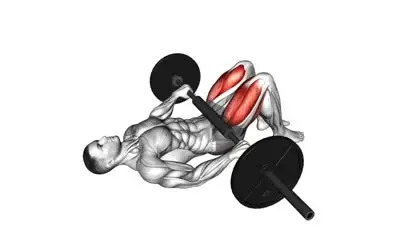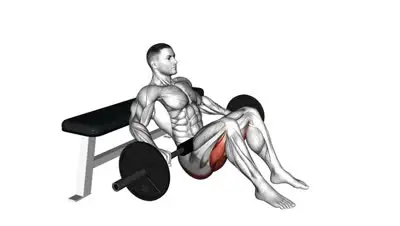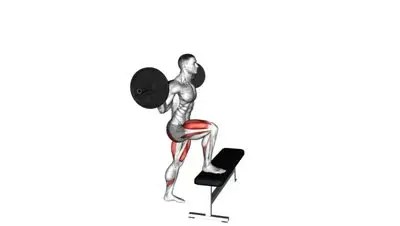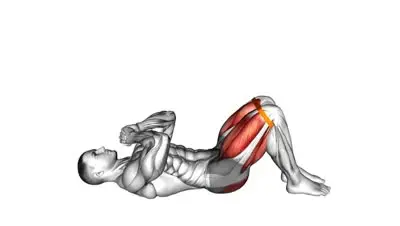

Description
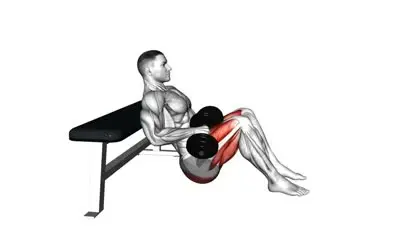
The single-leg hip thrust is a unilateral glute builder that drives one hip into extension against a load while the foot is planted and the shoulders are supported on a bench. By working one side at a time, it dramatically increases the stability and balance demand on the glute and exposes side-to-side differences that a two-leg hip thrust hides. The movement keeps the glutes under high tension at the top — the fully contracted, hip-extended position where they work hardest — making it one of the most direct glute exercises available. Loaded with a dumbbell across the hips or done bodyweight, it scales from beginner to advanced.
How to perform
- Set your shoulders on a bench Sit on the floor with your upper back against the long edge of a bench. Optionally rest a dumbbell across the hip of the working side, holding it in place.
- Plant your working foot Plant one foot flat on the floor, knee bent about 90°, roughly under your knee at the top. Lift the other leg, either extended straight or tucked toward your chest.
- Brace and tuck the ribs Brace your core, tuck your ribs down, and keep your chin slightly tucked so the movement comes from the hip, not a lumbar arch.
- Drive the hip up Push through the heel of the planted foot to drive your hip up until your torso and thigh form a straight line. Keep the non-working leg position fixed.
- Squeeze at lockout Pause at the top with the glute of the working side fully contracted and the hips level — do not let the unsupported side drop or rotate.
- Lower and match sides Lower the hip under control to just above the floor, then drive up again. Finish all reps, then switch sides and match the rep count.
Tips
- Drive through the heel, not the toes — heel drive keeps the glute as the prime mover instead of shifting work to the quad.
- Squeeze hard and pause at the top — the lockout is where the glute is most contracted, so own that position for a beat.
- Keep your hips level at the top; letting the unsupported side drop or your pelvis rotate means the working glute is losing the fight.
- Tuck your ribs and chin to keep the motion in the hip — arching the lower back to gain height steals work from the glutes.
- Start bodyweight to groove balance, then add a dumbbell across the hip once you can lock out level and stable.
Common mistakes
- Arching the lower back to lift higher — hyperextending the lumbar spine fakes range and takes tension off the glute. Keep ribs down.
- Pushing through the toes — driving off the ball of the foot shifts load to the quads instead of the glutes.
- Letting the hips rotate or drop — failing to keep the pelvis level means the working glute is not doing its full share.
- Bouncing off the floor — using momentum at the bottom robs the glute of controlled tension and reduces the stimulus.
- Uneven sides — doing more clean reps on the stronger side reinforces the imbalance the single-leg version is meant to fix.
Recommended sets & reps
| Sets | Reps | RIR | |
|---|---|---|---|
| Strength | 3–4 | 6–10 | 1–2 |
| Hypertrophy | 3–4 | 10–15 | 1–2 |
| Endurance | 2–3 | 15–20 | 2–3 |
| Power | 3–4 | 5–8 | 1–2 |
These ranges are working sets per side — the glutes tolerate and respond to higher reps and frequent training. Pair with 2× per week frequency and other hip-extension work to reach ~10–20 weekly glute sets, the volume range supported by current evidence (Schoenfeld 2017, Pelland 2025).
Benefits
Builds the glutes one side at a time, correcting the left-right imbalances that a two-leg hip thrust lets you mask. The unilateral setup adds a strong balance and anti-rotation demand, so the glute works harder to keep the pelvis level. Like all hip thrusts, it loads the glute most in the fully contracted, hip-extended position where it generates peak force — a stimulus that carries directly into sprinting, jumping and heavy hinging. It needs only a bench and a single dumbbell, scales from bodyweight to heavy, and is gentle on the lower back. A precise, low-equipment glute builder that develops symmetrical strength and shape.
Frequently asked questions
Single-leg vs barbell hip thrust — which is better?
The barbell hip thrust moves the most total load and is best for raw glute strength; the single-leg version adds balance and anti-rotation demand and corrects side-to-side imbalances with far less weight. Use the barbell version for heavy loading and the single-leg version as an accessory to build symmetry.
How do I make the single-leg hip thrust harder without a barbell?
Add a dumbbell or weight plate across the working hip, slow the lowering phase, pause at the top, or elevate the working foot for a longer range. Adding a dumbbell is the simplest progression and lets you overload the glute precisely.
Why do I feel single-leg hip thrusts in my quads or hamstrings, not my glutes?
Usually you are pushing through the toes or arching the lower back. Drive through the heel, tuck your ribs, and consciously squeeze the glute at the top. Reducing the range slightly and slowing down until you feel the glute fire almost always fixes it.
Is the single-leg hip thrust good for beginners?
Yes — start with bodyweight to learn the heel drive and balance. It is joint-friendly and easy on the lower back, making it an excellent introduction to direct glute training. Add load only once you can lock out with the hips level and stable.
Educational guidance only — not a substitute for in-person coaching. Train within your ability and use a spotter for heavy attempts.