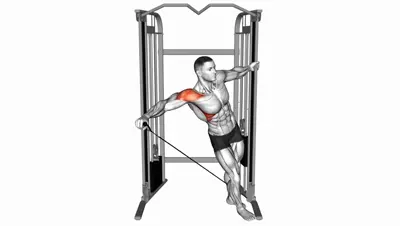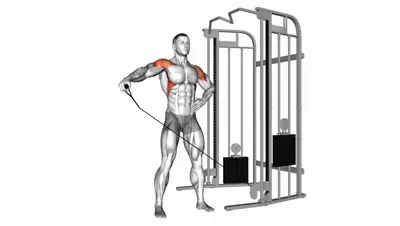

Description
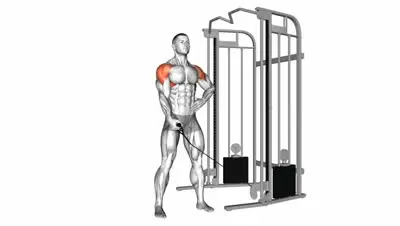
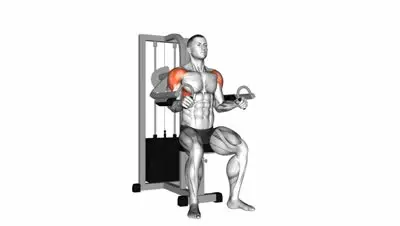
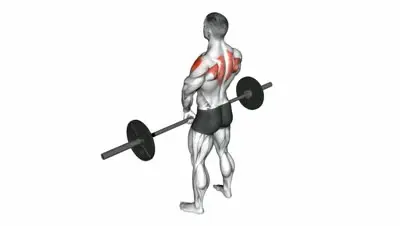
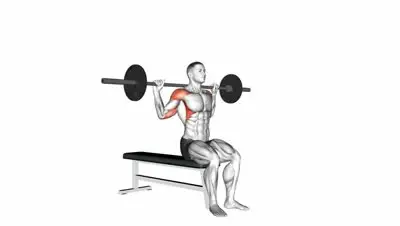
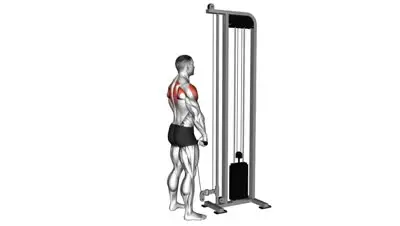
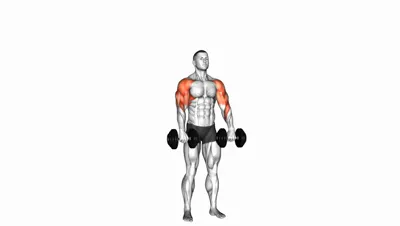
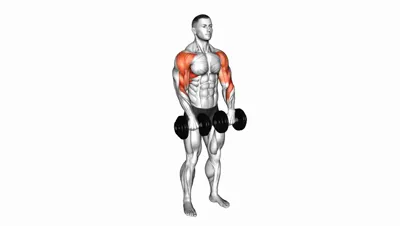
The dumbbell lateral raise is the defining exercise for the side delts — the muscle that gives shoulders their width. Standing with a dumbbell in each hand, you raise the arms out to the sides until they reach shoulder height, isolating a head of the deltoid that pressing movements barely touch. Because the side delts only abduct the arm, no compound lift replaces this work, which is why lateral raises appear in nearly every physique-focused program. Light weights, strict form and high-quality reps beat heavy swinging here every single time.
How to perform
- Stand tall with dumbbells Hold a light dumbbell in each hand at your sides, feet hip-width, knees soft, core braced and chest up.
- Set a soft elbow bend Bend the elbows ten to twenty degrees and lock that angle in — the arms stay rigid from shoulder to hand for the whole set.
- Lead the raise with your elbows Raise both arms out to the sides, driving the elbows up and slightly forward in the scapular plane, hands following rather than leading.
- Stop at shoulder height Lift until your elbows reach shoulder level with hands at or just below elbow height — going higher shifts the work to the traps.
- Pause briefly at the top Hold the top position for a beat with the side delts fully contracted, without shrugging the shoulders toward the ears.
- Lower slower than you lifted Take two to three seconds to lower the dumbbells back to your sides, resisting gravity the entire way down.
Tips
- Raise the arms slightly forward of straight sideways — about 20 to 30 degrees, the scapular plane — for the strongest stimulus with the least shoulder pinch.
- Keep the hands roughly level with the elbows or a touch below; a strong 'pour the jug' tilt is unnecessary and can irritate the shoulder.
- Imagine pushing the dumbbells away from your body rather than lifting them up — long arcs keep tension on the delts instead of the traps.
- Drop the ego on load selection: the side delts are small, and five strict kilos build more width than fifteen swung ones.
- When full-range reps stop, finish with short partials out of the bottom — the stretched half of the range still drives growth under fatigue.
Common mistakes
- Swinging with the hips and knees — momentum launches the dumbbells and turns a delt isolation into a whole-body shrug; if you must lean back, the weight is too heavy.
- Shrugging the shoulders upward — the traps take over the instant the shoulder blades elevate; keep them pulled down while the arms rise.
- Raising above shoulder height — past horizontal, the traps dominate and the impingement risk climbs without extra delt growth.
- Letting the elbow angle open and close each rep — pumping the elbows turns the raise into a half press and changes the load mid-rep.
- Dropping the weights on the descent — the eccentric is half the stimulus; falling dumbbells waste half of every set.
Recommended sets & reps
| Sets | Reps | RIR | |
|---|---|---|---|
| Strength | 3–4 | 8–10 | 1–2 |
| Hypertrophy | 3–4 | 10–15 | 1–2 |
| Endurance | 2–3 | 15–20 | 2–3 |
| Power | 3 | 8–10 | 2–3 |
These ranges are working sets only — add 1–2 progressive warm-up sets before each working set. Pair with 2× per week frequency to reach ~10–20 weekly sets per muscle group, the volume range supported by current evidence (Schoenfeld 2017, Pelland 2025).
Benefits
Directly builds the side delts, the single biggest contributor to visual shoulder width and the V-taper — and a muscle no pressing movement trains well. Strengthens arm abduction, balancing the front-delt dominance that develops from heavy benching and overhead pressing. Very low systemic fatigue, so meaningful volume fits into any program without stealing recovery from the big lifts. Trains shoulder control through a range most daily activity never visits, supporting joint health under load. Needs nothing but a pair of light dumbbells, making it one of the most accessible width-builders in all of training.
Frequently asked questions
Why are lateral raises so hard with light weight?
The dumbbell sits at the end of a long lever — your whole arm — so torque at the shoulder is enormous relative to the load in hand. A strict 7 kg raise can be harder than rowing five times that. Judge progress by rep quality and rep count, not the number on the bell.
Should I raise to the front, side or rear?
For the side delts, raise in the scapular plane — straight out with a slight forward angle of 20 to 30 degrees. True front raises hit the anterior delt, which already gets plenty from pressing, and rear-delt work is a separate movement entirely.
How high should lateral raises go?
To shoulder height, no higher. At horizontal, the side delt has done its job; beyond that, the traps and upper back take over and the shoulder joint gets crowded. Stop at parallel and squeeze.
How often can I train lateral raises?
The side delts recover fast — two to three sessions a week works well for most lifters. Spreading 10 to 20 weekly sets across multiple days beats one giant shoulder day, in line with current frequency evidence.
Educational guidance only — not a substitute for in-person coaching. Train within your ability and use a spotter for heavy attempts.