
Description
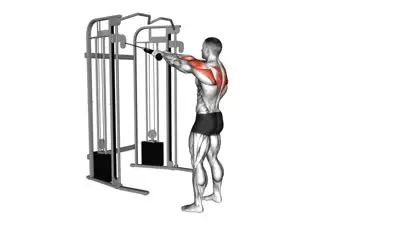
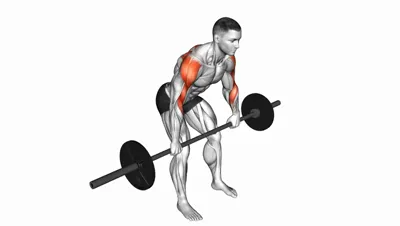
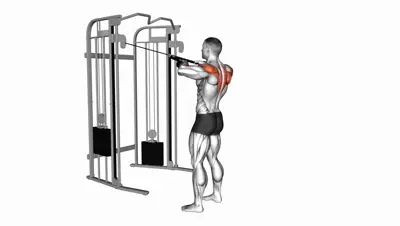
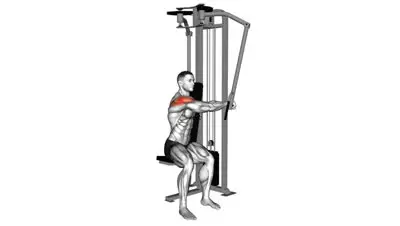
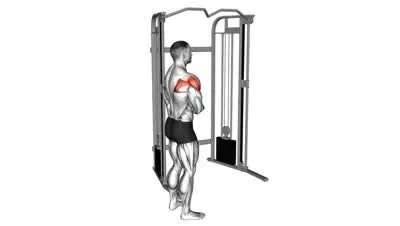
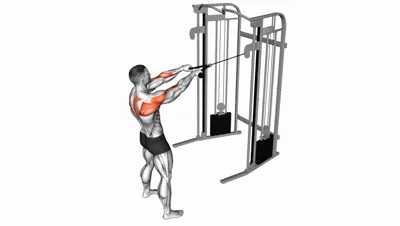
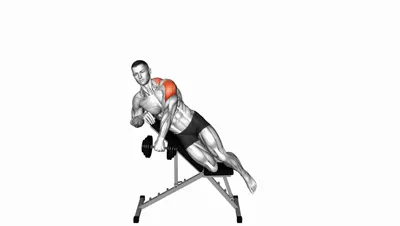
The dumbbell rear delt fly trains the posterior deltoid — the most neglected of the three shoulder heads — through pure horizontal abduction in a hinged position. Bent over with a flat back, you sweep light dumbbells out to the sides, reaching wide rather than squeezing the shoulder blades, so the rear delts move the load instead of the traps. Rear delt development is what makes shoulders look three-dimensional from the side and keeps the shoulder joint balanced against all the pressing in a program — and this simple fly remains the most direct free-weight way to build it.
How to perform
- Hinge into position Hold light dumbbells and hinge at the hips until your torso is near parallel to the floor, back flat, knees soft.
- Let the dumbbells hang Start with arms hanging straight down from the shoulders, palms facing each other and elbows softly bent.
- Sweep wide, not back Raise both arms out to the sides in a wide arc, leading with the back of the hands, until they reach shoulder height.
- Reach instead of squeezing Keep the shoulder blades quiet — think of reaching the hands far apart rather than pinching the blades together.
- Pause at the top Hold the top position for a beat with the rear delts fully contracted, neck neutral and torso unmoved.
- Lower with control Bring the dumbbells back down in two to three seconds along the same wide arc, stopping before momentum builds at the bottom.
Tips
- Go embarrassingly light — the rear delts are small, and a strict five-kilo fly outgrows a swinging fifteen every time.
- Think 'long arms reaching apart' instead of 'rowing back' — minimal scapular movement keeps the work in the rear delts, not the traps.
- Turn the thumbs slightly down at the top of the arc to bias the posterior fibers a touch harder; keep it subtle, not forced.
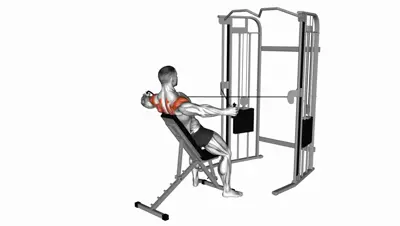
- Brace your torso against a slight chest support — an incline bench set low removes all temptation to heave with the hips.
- Add a one-second hold at the top of every rep; the rear delts spend most training weeks under-stimulated and respond fast to honest time under tension.
Common mistakes
- Standing up as you lift — rising out of the hinge turns the fly into a swing and feeds the load to the traps and lower back.
- Squeezing the shoulder blades together — heavy retraction makes it a rowing pattern; the rear delt's job here is pure horizontal abduction.
- Using too much weight — the giveaway is bent elbows pumping and a bouncing torso; rear delt flys are a precision lift, not a load lift.
- Throwing the arms past shoulder height — beyond horizontal the traps take over completely and the shoulder crowds; stop at parallel.
- Cutting the eccentric — dropping the dumbbells back down skips half the stimulus for a muscle that needs every clean rep it can get.
Recommended sets & reps
| Sets | Reps | RIR | |
|---|---|---|---|
| Strength | 3–4 | 10–12 | 1–2 |
| Hypertrophy | 3–4 | 12–15 | 1–2 |
| Endurance | 2–3 | 15–20 | 2–3 |
| Power | 3 | 10–12 | 2–3 |
These ranges are working sets only — add 1–2 progressive warm-up sets before each working set. Pair with 2× per week frequency to reach ~10–20 weekly sets per muscle group, the volume range supported by current evidence (Schoenfeld 2017, Pelland 2025).
Benefits
Builds the rear delts, the head that completes a shoulder's roundness from the side and back — without it, even big delts look flat in profile. Balances all the pressing volume in a typical program, supporting healthy shoulder mechanics and posture by strengthening the muscles that pull the arm rearward. Low loads and minimal setup make it easy to slot meaningful rear-delt volume anywhere in the week. The hinged unsupported version doubles as light postural training for the entire posterior chain, while a chest-supported setup isolates even harder when strictness is the goal.
Frequently asked questions
Why are my rear delts so weak?
They rarely get direct work — pressing dominates most programs and rows hit them only as a side effect. Two to three dedicated sets of strict flys a few times per week fixes the gap surprisingly fast, precisely because the muscle is so undertrained.
Rear delt fly vs face pull — which is better?
Both target the rear delts but differently: the fly isolates pure horizontal abduction through a long arc, while the face pull adds external rotation and mid-trap work. They stack well in the same program — fly for isolation volume, face pull for shoulder-health quality.
Should I do rear delt flys bent over or chest supported?
Chest supported on an incline bench is stricter and removes lower-back fatigue, making it the better hypertrophy default. The free-standing hinge adds a postural training element but invites cheating as the set gets hard. Use the supported version when rear delts are the priority.
How heavy should rear delt flys be?
Light enough for a one-second pause at shoulder height with a quiet torso — typically 4–10 kg per hand even for experienced lifters. Progress by reps and pause quality first, load second; the rear delts punish ego lifting with zero growth.
Educational guidance only — not a substitute for in-person coaching. Train within your ability and use a spotter for heavy attempts.