
Description
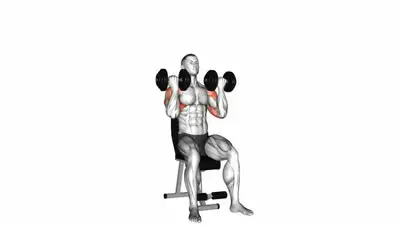
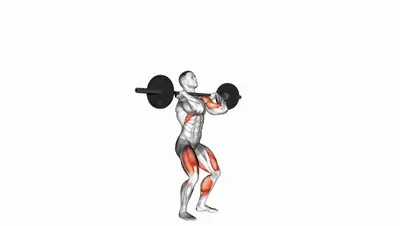
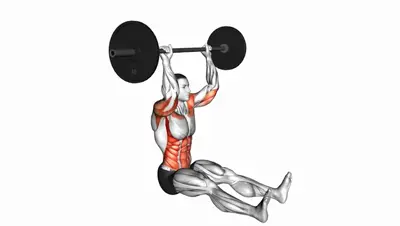
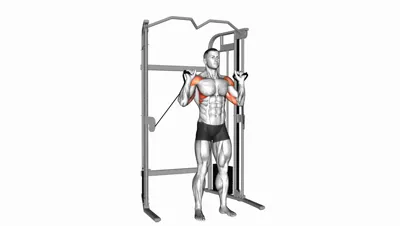
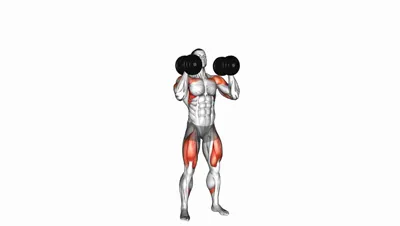
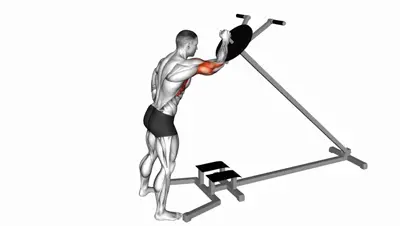
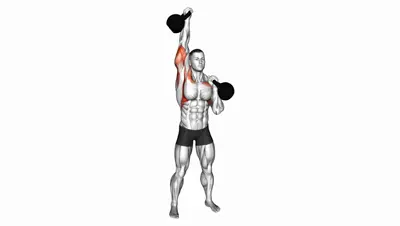
The barbell overhead press is the gold-standard compound lift for shoulder development and overall pressing strength. It loads the front and lateral delts, triceps and upper chest while demanding full-body bracing — the press is performed standing, so the entire core, glutes and lower back stabilize against the moving load. Often called the strongman press, the standing overhead press built the legendary physiques of pre-bench-press-era strength athletes and remains one of the most honest tests of upper-body pressing power in the gym today.
How to perform
- Set up at the rack Set the bar in the rack at collarbone height. Approach the bar and grip it just outside shoulder-width with wrists stacked over forearms — bar resting on the front delts.
- Unrack and set your stance Unrack the bar by stepping forward, take one short step back, and set your feet shoulder-width apart. Brace your core and squeeze your glutes hard.
- Brace and press up Take a deep belly breath, brace, and press the bar straight up by extending the elbows. Move your head slightly back and forward as the bar passes your face to keep the bar path vertical.
- Lock out overhead Press the bar to lockout directly over the crown of your head — biceps next to ears, shoulders shrugged up. The bar is now over the mid-foot.
- Lower to the front delts Lower the bar under control to the front delts in the same path. Re-brace before the next rep.
- Reset between reps Reset breathing and bracing every rep on heavy sets. Do not press from a soft brace — the lower back is the first thing to break.
Tips
- Squeeze your glutes hard throughout the lift — prevents the lower back from hyperextending under heavy load.
- Press straight up, not forward — most pressing failures are caused by the bar drifting forward as the elbows flare.
- Use a slight leg drive only when transitioning to push press; a strict press has no knee bend.
- Train the overhead press 1–2× per week — its recovery cost is moderate but technique requires consistency.
- Improve your t-spine mobility — locked-up upper back is the #1 cause of stalled overhead pressing.
Common mistakes
- Hyperextending the lumbar spine to drive the bar overhead — turns the press into an unstable incline bench. Squeeze glutes and brace harder.
- Pressing the bar forward instead of straight up — robs the lift of vertical efficiency and stresses the front shoulders.
- Using a grip too wide — shortens the range of motion and reduces triceps engagement.
- Neglecting the lockout — the top of the press is where stability and strength are built. Hold for a half-second over the head.
- Letting the elbows flare to 90° — overloads the rotator cuff. Keep elbows roughly under the wrists with a 45° tuck.
Recommended sets & reps
| Sets | Reps | RIR | |
|---|---|---|---|
| Strength | 3–5 | 3–6 | 1–2 |
| Hypertrophy | 2–3 | 6–9 | 1–2 |
| Endurance | 2–3 | 12–15 | 2–3 |
| Power | 3–5 | 3–5 | 1–2 |
These ranges are working sets only — add 1–2 progressive warm-up sets before each working set. Pair with 2× per week frequency to reach ~10–20 weekly sets per muscle group, the volume range supported by current evidence (Schoenfeld 2017, Pelland 2025).
Benefits
Builds the front and lateral delts faster than any seated press because the standing position demands stabilization across the entire body. Develops triceps and upper-chest mass as a synergistic side-effect, transferring directly to bench-press lockout strength. Strengthens the core under heavy axial load — pressing while standing requires bracing rivaled only by the squat and deadlift. Provides one of the cleanest tests of true pressing strength in the gym — no leg drive, no momentum, no incline bench helping out. Trainable for decades with progressive overload.
Frequently asked questions
Standing vs seated overhead press — which builds bigger shoulders?
Standing builds more total upper-body and core strength because the entire body must stabilize the load. Seated allows slightly heavier loads on the delts directly, which can be useful for pure shoulder hypertrophy. A balanced program uses standing as the primary lift and seated work as accessory.
Why does my lower back hurt when I press overhead?
Almost always because you hyperextend the lumbar spine to drive the bar up. Fix it by squeezing your glutes maximally throughout the lift, bracing the core hard and keeping the rib cage down. If pain persists, check your t-spine mobility — restricted upper-back extension forces the lumbar to compensate.
How wide should my grip be?
Just outside shoulder-width — about 1.3–1.4× your shoulder width. The forearm should be roughly vertical at the bottom of the press. Too wide reduces range of motion; too narrow shifts excessive load to the triceps and limits delt development.
Strict press vs push press — which is better for size?
Strict press for pure shoulder hypertrophy and tendon strength. Push press allows heavier loads with leg drive, which builds explosive overhead power and lockout strength. Most lifters benefit from running both — strict press as the primary lift, push press as an occasional volume or peaking variation.
Educational guidance only — not a substitute for in-person coaching. Train within your ability and use a spotter for heavy attempts.