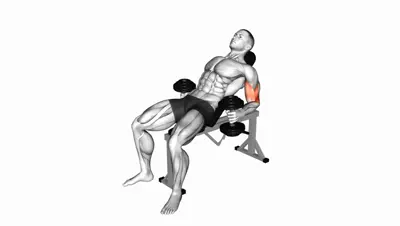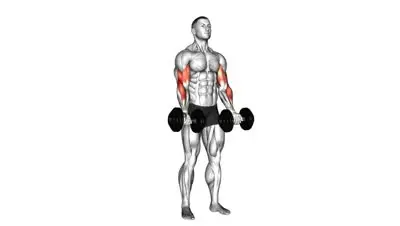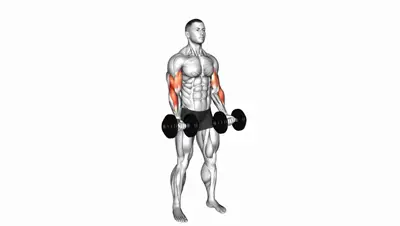

Description
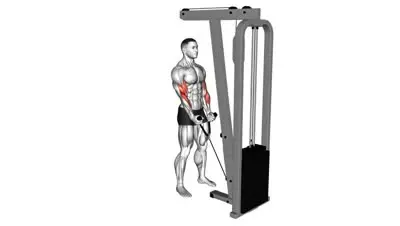
The cable cross-body hammer curl pulls a low cable diagonally across your torso with a neutral grip, combining the brachialis emphasis of a hammer curl with the constant tension only a cable provides. Where dumbbell hammer curls lose resistance near the top, the cable keeps pulling from the side through the entire arc, and the cross-body path puts the brachialis and brachioradialis in their strongest line of pull. Trained one arm at a time, it builds the muscle that sits underneath the biceps and physically pushes it up — one of the highest-return moves for thicker-looking upper arms.
How to perform
- Set the pulley to the bottom Attach a single D-handle to the lowest pulley position. Stand side-on to the stack so the working arm is on the far side of your body.
- Grab the handle across your body Reach across your torso and take the handle with a neutral, thumbs-up grip. Step away until the cable is taut with your arm hanging diagonally.
- Lock your elbow position Pin the working elbow against your side. Your upper arm stays vertical and still — only the forearm will travel during the curl.
- Curl diagonally toward your shoulder Pull the handle up and across toward the opposite shoulder, keeping the neutral grip and letting the cable's angle guide the diagonal path.
- Squeeze at peak contraction Pause for one second at the top, where the cable tension is still fully loaded — this is the advantage over a dumbbell, so use it.
- Lower with control and switch Resist the cable back down over two to three seconds until the arm is fully extended. Complete all reps, then face the other way and switch arms.
Tips
- Keep your elbow pinned to your side like it is bolted there — if it drifts forward, the front delt starts curling and the brachialis stops.
- Take a full stretch at the bottom with the arm completely extended; the cable keeps tension there, which a dumbbell cannot do.
- Stand far enough from the stack that the cable never goes slack at any point of the rep.
- Turn your head to check your form in a mirror sideways-on once per set — the diagonal path makes elbow drift hard to feel and easy to see.
Common mistakes
- Letting the elbow travel forward during the curl — this recruits the front delt and shortens the effective range; the upper arm must stay vertical from first rep to last.
- Rotating the torso toward the cable to help the pull — twisting generates the force the brachialis should produce; keep shoulders square and let the arm work alone.
- Curling with a supinated palm-up grip — turning the wrist converts the exercise into a regular cable curl and drops the brachialis emphasis; keep thumbs pointing up throughout.
- Standing too close to the stack — a slack cable at the bottom deletes the constant-tension benefit that justifies the cable version; step out until it is taut at full extension.
Recommended sets & reps
| Sets | Reps | RIR | |
|---|---|---|---|
| Strength | 3 | 8–10 | 1–2 |
| Hypertrophy | 3–4 | 10–15 | 1–2 |
| Endurance | 2–3 | 15–20 | 2–3 |
| Power | 3 | 8–10 | 2–3 |
Reps count per arm — finish one side before switching, starting with the weaker arm. These are working sets only; add 1 light warm-up set and slot the exercise into ~10–20 weekly sets of elbow-flexor volume trained 2× per week (Schoenfeld 2017, Pelland 2025).
Benefits
Targets the brachialis — the deep muscle under the biceps that adds visible thickness to the upper arm — through the neutral grip and cross-body line of pull that put it in its strongest position. The low cable keeps resistance on the muscle at full stretch and full contraction alike, closing the dead spots a dumbbell hammer curl leaves at the bottom and top. One-arm-at-a-time training equalizes left-right arm development and lets you focus completely on the working side. The strict, elbow-pinned setup makes cheating obvious immediately, so the volume you log is honest volume — a quiet but real advantage for long-term arm growth.
Frequently asked questions
What does the cross-body hammer curl work that a normal curl doesn't?
The neutral grip and diagonal path emphasize the brachialis and brachioradialis over the biceps. The brachialis lies underneath the biceps, so growing it pushes the whole arm up and adds width you cannot get from supinated curls alone.
Cable or dumbbell cross-body hammer curl — which is better?
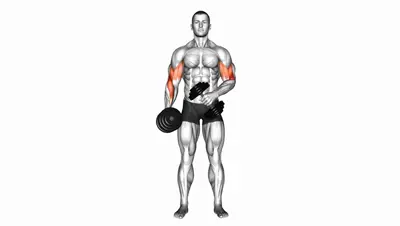
Both hit the same muscles, but the cable holds tension at the bottom and top of the rep where the dumbbell version goes light. If you have access to a low pulley, the cable is the stricter, more complete stimulus.
How heavy should I go on this exercise?
Moderate — a weight you can control for 10–15 strict reps per arm with the elbow pinned. The brachialis responds to time under tension, not to heaving; if your torso twists, drop a plate.
Is this exercise good for beginners?
Yes — the fixed cable path and single-arm focus make form easy to learn, and it builds the elbow-flexor base that later supports heavier rows and chin-ups. Start light and master the pinned-elbow position first.
Educational guidance only — not a substitute for in-person coaching. Train within your ability and use a spotter for heavy attempts.