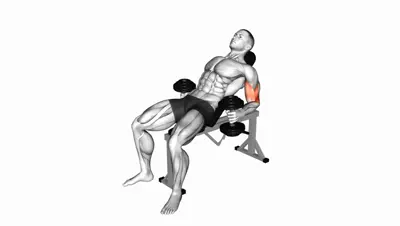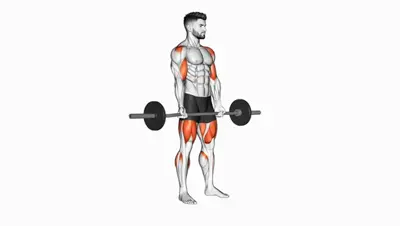

Description
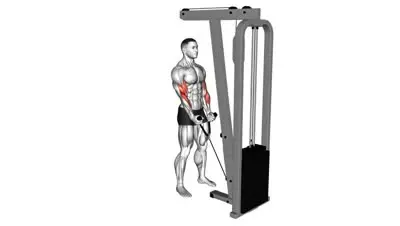
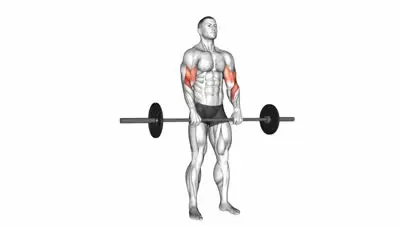
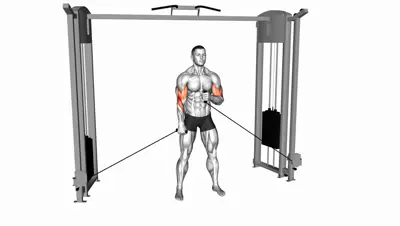
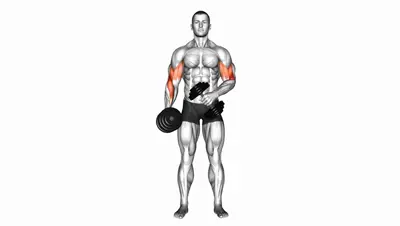
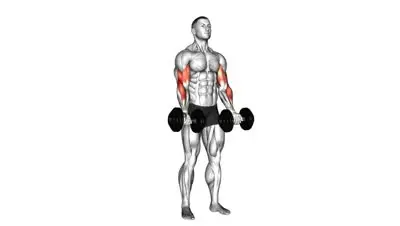
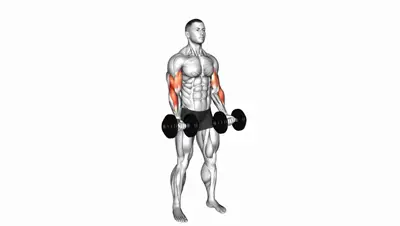
The dumbbell hammer curl is a neutral-grip curl that builds the thickness of the upper arm and forearm in one movement. With palms facing each other, the load shifts toward the brachialis — the muscle underneath the biceps that pushes it up and widens the arm — and the brachioradialis, the strongest muscle of the forearm. The neutral grip is also the strongest and most joint-friendly curling position, allowing heavier loads than supinated curls with less elbow and wrist irritation, which makes hammer curls the standard second curl in nearly every arm program.
How to perform
- Stand tall, palms facing in Hold a dumbbell in each hand at your sides with a neutral grip — palms facing your thighs — feet hip-width and core braced.
- Pin your elbows to your sides Lock your upper arms against your torso; they stay vertical and still for the entire set while only the forearms move.
- Curl without rotating Curl both dumbbells up, keeping the palms facing each other the whole way — no twisting toward a regular curl grip.
- Stop at peak contraction Raise until the dumbbells reach shoulder height with forearms fully flexed against the upper arms; squeeze hard for a beat.
- Lower slow and straight Lower the dumbbells along the same path in two to three seconds, resisting the weight all the way to full elbow extension.
- Reset before the next rep Reach a dead hang with straight elbows and still shoulders before curling again — no bounce out of the bottom.
Tips
- Keep your wrists locked straight in line with the forearm — curling the wrists toward you turns half the set into wrist flexor work.
- Squeeze the dumbbell handles hard; a crush grip pre-activates the brachioradialis and steadies the elbow position.
- Cross-body hammer curls — curling toward the opposite shoulder — bias the brachialis even harder and make a great variation block.
- Alternate arms when loads get heavy to keep torso English out of the movement, or curl both together to double time efficiency.
- Take the slow eccentric seriously: the brachialis responds strongly to lengthened-position tension on the way down.
Common mistakes
- Swinging the hips to start each rep — momentum from the lower body unloads the very muscles you are training; brace and keep the torso dead still.
- Letting the elbows drift forward — turning the curl into a front raise shifts tension to the front delts and shortens the biceps' working range.
- Rotating the palms upward mid-rep — twisting into supination turns it back into a regular curl and abandons the brachialis emphasis.
- Dropping the weights on the descent — a falling eccentric wastes the half of the rep that builds the most thickness.
- Cutting the bottom range — stopping ten degrees short of straight keeps the brachialis from working at length, where it grows best.
Recommended sets & reps
| Sets | Reps | RIR | |
|---|---|---|---|
| Strength | 3–4 | 6–8 | 1–2 |
| Hypertrophy | 3–4 | 8–12 | 1–2 |
| Endurance | 2–3 | 12–15 | 2–3 |
| Power | 3 | 6–8 | 2–3 |
These ranges are working sets only — add 1–2 progressive warm-up sets before each working set. Pair with 2× per week frequency to reach ~10–20 weekly sets per muscle group, the volume range supported by current evidence (Schoenfeld 2017, Pelland 2025).
Benefits
Builds the brachialis, the hidden muscle that lifts the biceps higher and adds width to the upper arm that regular curls cannot deliver alone. Develops the brachioradialis for thicker, stronger forearms — the difference between arms that look trained and arms that look powerful. The neutral grip is the strongest curling position, so loads progress faster while the wrists and elbows stay comfortable, making hammer curls a long-term staple even when supinated curls cause irritation. Grip and elbow-flexor strength carry over directly to rows, pull-ups and deadlifts.
Frequently asked questions
What's the difference between hammer curls and bicep curls?
The grip. Regular curls supinate the palms upward and bias the biceps brachii, while the hammer's neutral grip shifts emphasis to the brachialis and brachioradialis. Both belong in an arm program — one builds the peak, the other builds width and forearm thickness.
Why can I lift more on hammer curls?
The neutral grip puts the strongest elbow flexors — brachialis and brachioradialis — in their best mechanical line of pull. Expect roughly 10–20 % more load than your supinated curl; just make sure the extra weight does not buy momentum.
Should I do hammer curls seated or standing?
Both work. Standing allows slightly heavier loads but invites body English; seated against a back pad removes cheating entirely. If your last few standing reps need a hip bump, switch to seated and keep the tension honest.
Are alternating or simultaneous hammer curls better?
Simultaneous curls save time and demand more core bracing; alternating lets each arm rest briefly, supporting heavier or cleaner reps late in a set. Pick based on the session goal — there is no hypertrophy difference at matched effort.
Educational guidance only — not a substitute for in-person coaching. Train within your ability and use a spotter for heavy attempts.