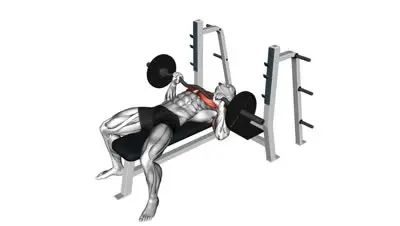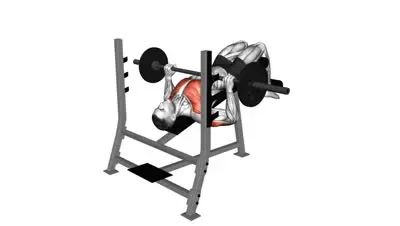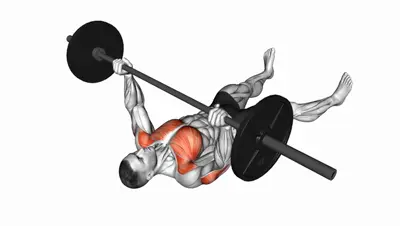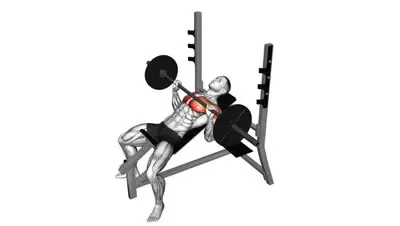

Description
The single-arm dumbbell bench press loads one side of the chest at a time, turning an ordinary press into a combined chest and core exercise. With a dumbbell on only one side, your trunk must resist rolling and twisting on the bench through every rep — an anti-rotation demand the two-arm version never creates. That makes it a powerful tool for exposing and correcting left-right strength differences while training the obliques and deep core hard. The independent path also allows a slightly deeper stretch and a natural pressing arc that many lifters find friendlier on the shoulder than a fixed barbell.
How to perform
- Bring the dumbbell up safely Sit on the bench with the dumbbell resting on one thigh. Lie back and use your knee to kick the weight up to your shoulder in one motion.
- Set your base on the bench Plant both feet flat on the floor, squeeze your glutes and brace your core. Extend your free arm slightly out to the side or rest it on your hip for balance.
- Start with the dumbbell over your chest Press the dumbbell up so it sits over your mid-chest with a neutral-to-45-degree palm angle, shoulder blade pulled down and back into the bench.
- Lower to the outside of your chest Bring the dumbbell down over two to three seconds toward the outside of your chest, keeping your hips and shoulders square on the bench the entire time.
- Press up without twisting Drive the dumbbell back up in a slight arc while actively resisting the pull to roll toward the loaded side — your torso should stay dead level.
- Finish the set and switch sides Complete all reps on one side, sit up carefully with the dumbbell close to your body, then repeat with the same weight and reps on the other arm.
Tips
- Start noticeably lighter than half of your two-dumbbell pressing weight — the anti-rotation demand costs more strength than most lifters expect.
- Begin every set with your weaker side and match those reps with the stronger side to close asymmetries instead of widening them.
- Push your feet hard into the floor; a solid leg base is what allows your core to keep the torso level under the offset load.
- Keep the non-working shoulder pinned to the bench — if it lifts off, the weight is too heavy or your core is no longer bracing effectively.
Common mistakes
- Rolling toward the loaded side — letting the torso tip removes the anti-rotation work and turns the exercise into an unstable regular press; keep both shoulders glued to the bench.
- Using the free hand to grip the bench hard — anchoring yourself defeats the core challenge that makes the unilateral version worth doing; keep the free arm loose.
- Choosing a load that only the strong side can handle — this reinforces the exact asymmetry you are trying to fix; let the weaker side set the weight.
- Twisting the hips or lifting a foot during the press — a shifting base leaks force and strains the lower back; keep feet planted and glutes engaged throughout.
Recommended sets & reps
| Sets | Reps | RIR | |
|---|---|---|---|
| Strength | 3–4 | 6–8 | 1–2 |
| Hypertrophy | 2–3 | 8–12 | 1–2 |
| Endurance | 2–3 | 12–15 | 2–3 |
| Power | 3 | 4–6 | 1–2 |
Reps count per arm — complete all reps on one side before switching, and always start with your weaker side. These are working sets only; add 1–2 progressive warm-up sets and pair with 2× per week frequency for ~10–20 weekly chest sets (Schoenfeld 2017, Pelland 2025).
Benefits
Exposes and corrects left-right chest and pressing-strength differences that stay hidden in barbell and two-dumbbell pressing, since each side must lift the load entirely on its own. Trains the obliques and deep core stabilizers isometrically on every rep — the offset load tries to roll you off the bench, and your trunk has to say no. Allows a full stretch and an individual pressing arc for each shoulder, which many lifters find more comfortable than a fixed bar path. Doubles as time-efficient core training: you accumulate meaningful anti-rotation volume without adding a single extra exercise to your session.
Frequently asked questions
Is the single-arm dumbbell bench press good for beginners?
Learn the regular two-dumbbell bench press first — it teaches the pressing pattern with a stable, symmetric load. Once you can press with control, the single-arm version is a valuable next step for core strength and fixing asymmetries.
How much weight should I use compared to normal dumbbell pressing?
Start with roughly 60–70 percent of the dumbbell you would use for two-arm pressing at the same rep range. The anti-rotation demand is significant, and form deteriorates fast if you jump straight to your usual weight.
Should I hold something with my free hand?
No — lightly extending the free arm for balance is fine, but gripping the bench anchors your torso and removes most of the core work. If you cannot stay level without holding on, reduce the weight.
Does this replace the regular bench press?
For most lifters it works best as a supplement, not a replacement. Keep a bilateral press as your main strength builder and use the single-arm version to address asymmetries and add core-integrated pressing volume.
Educational guidance only — not a substitute for in-person coaching. Train within your ability and use a spotter for heavy attempts.