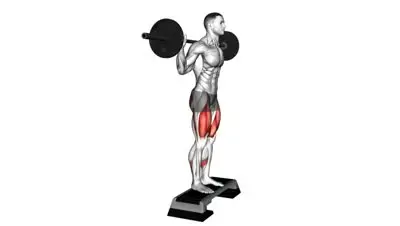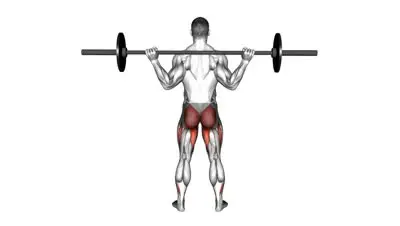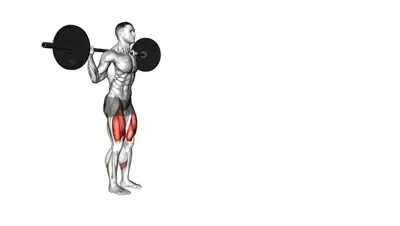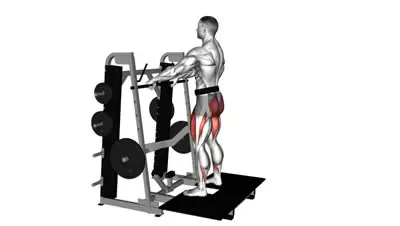

Description
The pistol squat is a full-depth squat on one leg with the free leg held straight out in front — the most demanding bodyweight quad exercise there is. It layers three challenges at once: single-leg strength through a complete range, ankle and hip mobility deep enough to sit into the bottom, and the balance to keep the knee tracking while everything shakes. Few people can do one on the first try, and that is normal: the pistol is earned through progressions like box pistols and assisted versions. In return, it builds legs and control with zero equipment, anywhere.
How to perform
- Stand on one leg Shift your weight onto one foot, planted flat and gripping the floor. Extend the other leg straight out in front, and reach both arms forward as counterbalance.
- Start the descent slowly Push your hips back and bend the standing knee, lowering yourself with control while the free leg stays off the floor.
- Track the knee over the toes Let the standing knee travel forward in line with your toes — over the second toe, never caving inward — as you sink deeper.
- Sit into the bottom position Descend until your hamstring rests on your calf, keeping the heel down and the free leg extended just above the floor.
- Drive up through the whole foot Push hard through the full foot — heel included — and stand back up without letting the knee collapse inward or the torso pitch forward extra.
- Finish tall and switch legs Stand fully upright, re-balance, complete your reps, then repeat on the other leg with the same depth standard.
Tips
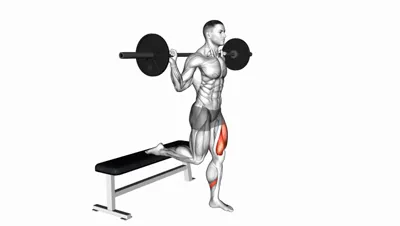
- Master box pistols first: squat to a box or bench on one leg, tap lightly and stand — lower the target over weeks until you own the full depth.
- Hold a small counterweight — a 2–5 kg plate at arm's length in front of you actually makes the pistol easier by shifting your balance backward.
- If your heel lifts at depth, your ankle mobility is the limiter; elevate the heel on a small plate while you work on calf and ankle flexibility separately.
- Descend in three slow seconds — the eccentric is your safest strength builder, and dive-bombing into the bottom is where knees complain.
- Film yourself from the front occasionally: knee cave is the fault you feel least and see most.
Common mistakes
- Letting the knee cave inward — valgus collapse under single-leg load is the pistol's main injury mechanism; the knee tracks over the second toe or the rep does not count.
- Dropping uncontrolled into the bottom — crashing into full depth uses the joints as brakes; lower in two to three seconds and treat the bottom as a position, not a rebound.
- Coming up on the toes — a lifting heel shifts everything forward and steals your balance; the whole foot stays glued down, and heel elevation is the fix while mobility catches up.
- Skipping straight to full pistols — failing ugly singles teaches bad mechanics; box pistols and assisted pistols build the same strength with a controllable standard.
- Rounding the back to reach depth — folding the torso over compensates for missing hip mobility; keep the chest as tall as your levers allow and work mobility on the side.
Recommended sets & reps
| Sets | Reps | RIR | |
|---|---|---|---|
| Strength | 3–4 | 3–6 | 1–2 |
| Hypertrophy | 2–3 | 6–10 | 1–2 |
| Endurance | 2–3 | 10–15 | 2–3 |
| Power | 3 | 3–5 | 1–2 |
Reps count per leg, and quality gates everything — a rep with knee cave or a crash landing does not count toward the set. Use box or assisted variations to stay within range; progress depth and control first, reps second (Helms et al. 2018 RIR model applies to clean reps only).
Benefits
Builds single-leg quad and glute strength through the deepest range a bodyweight exercise can offer, exposing and closing left-right differences that bilateral squats let hide. Develops ankle, knee and hip control simultaneously — the balance demand trains the small stabilizers that barbells never wake up, with direct carryover to sport and uneven terrain. Requires literally nothing: no rack, no load, no gym — the same exercise works in a hotel room or on a trail. Doubles as a mobility benchmark, since a clean pistol certifies functional ankle dorsiflexion and hip flexion; the practice that gets you there improves both along the way.
Frequently asked questions
I can't do a single pistol squat — where do I start?
Box pistols: squat on one leg to a bench, tap and stand. Lower the surface over weeks. Add assisted pistols holding a door frame or suspension trainer for the balance component, and a small counterweight held in front to make full reps achievable.
Are pistol squats bad for the knees?
Not inherently — the knee travels forward past the toes, which is normal and safe for healthy knees when the load builds gradually. The genuine risks are knee cave and crash landings, both fixed by strict tracking and slow eccentrics.
Why does my heel lift at the bottom?
Limited ankle dorsiflexion — the deep pistol position demands more of it than almost any other exercise. Elevate your heel on a small plate to train now, and stretch and load your calves and ankles to fix the limiter over time.
Do pistol squats replace barbell squats?
They complement rather than replace — pistols excel at unilateral strength, balance and mobility, while barbells allow progressive loading far beyond bodyweight. Lifters wanting maximal size and strength keep both; travelers and home trainees can get remarkably far on pistols alone.
Educational guidance only — not a substitute for in-person coaching. Train within your ability and use a spotter for heavy attempts.